What Are the Different Types of Security Seals? A Comprehensive B2B Guide
In the global supply chain, the integrity of cargo from point A to point B is paramount. Security seals, as simple as they may appear, are critical tools for ensuring tamper-evidence, reducing theft, and meeting international compliance standards. For B2B buyers, logistics managers, and procurement specialists, understanding the different types of security seals is essential for selecting the right level of protection for specific applications. This guide provides a detailed overview of the primary categories, their technical specifications, adherence to ISO 17712 standards, and their strategic role in modern logistics.
The Critical Role and Classification of Security Seals
Security seals are single-use, tamper-evident devices used to secure shipping containers, truck trailers, railcars, utility meters, and other assets. Their core function is to provide visible proof of unauthorized access. The global market for high-integrity cargo security seals is driven by rising supply chain complexity, increased cargo theft incidents, and stringent requirements from insurers and customs authorities worldwide.
Seals are broadly classified by their security level, which dictates their design, materials, and testing standards:
Indicative Seals: Provide basic visual tamper evidence but offer low resistance to forced entry. (e.g., plastic pull-tight seals).
Security Seals: Offer a higher level of tamper resistance and are often made of metal or robust plastic.
High-Security Seals: Engineered to resist deliberate tampering for a defined period, constructed from high-strength materials, and must be certified to rigorous international standards like ISO 17712.
Detailed Breakdown: Primary Types of Security Seals
Choosing the correct seal depends on the asset being secured, the mode of transport, and the perceived risk level.
1. Barrier Seals (Bolt Seals)
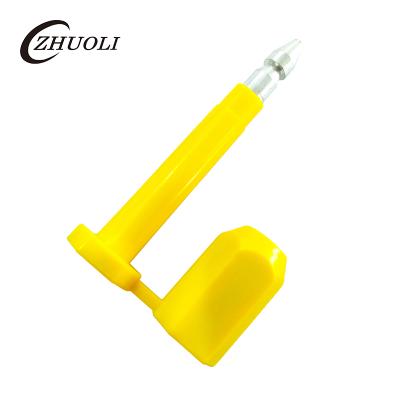
Barrier seals, commonly referred to as bolt seals, are the industry standard for intermodal shipping containers and truck trailers.
Design & Construction: Consist of a hardened steel bolt and a locking body (collar). The bolt is inserted through the container door hasps, and the head is pressed or screwed into the locking body, creating a permanent, rigid assembly.
Key Features:
High Tensile Strength: Designed to resist pull-apart attacks.
Shear Strength: The bolt is hardened to resist cutting with bolt cutters.
Tamper-Evident Locking Mechanism: Once engaged, the collar cannot be removed without destroying the seal. Many feature a free-spinning barrel to prevent grip-based attacks.
Primary Application: Sealing the doors of shipping containers, ocean freight containers, and heavy-duty truck trailers. Their rigidity makes them unsuitable for securing uneven or flexible points.
2. Cable Seals
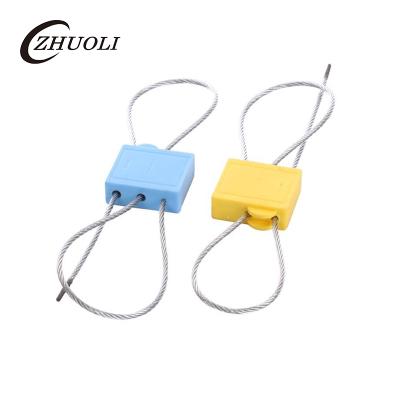
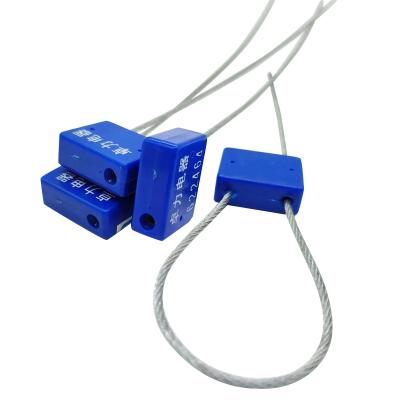
Cable seals offer flexibility, making them versatile for non-standard applications.
Design & Construction: Feature a high-strength steel cable loop (typically 2-3mm in diameter) with a locking mechanism at one or both ends. The cable is threaded through the items to be secured and then locked.
Key Features:
Flexibility: The cable can be routed through multiple securing points, handles, or around irregular shapes.
Length Variability: Available in various cable lengths (from 30cm to over 2 meters) for diverse applications.
Strength: The braided or stranded steel cable provides high tensile strength and is resistant to cutting, though generally less so than a solid bolt.
ISO 17712 Compliance: High-security cable seals can also achieve ISO 17712 "H" certification, with strength ratings appropriate to their cable diameter and construction.
Primary Application: Securing tanker hatches, railcar doors, air cargo units, utility meters, and internal compartments within a trailer where rigid bolts cannot be used.
3. Electronic Seals (E-Seals)
Representing the convergence of physical security and digital monitoring, electronic seals are transforming supply chain visibility.
Design & Construction: Integrate a physical locking mechanism (often a bolt or cable form factor) with an embedded microchip, RFID tag, and sometimes GPS and sensors.
Key Features:
Automatic Identification: Use RFID to enable hands-free, rapid scanning at port gates or checkpoints.
Real-Time Monitoring: Advanced electronic container seals (e-seals) can record and transmit timestamps of seal engagement/disengagement and detect tampering in real-time via cellular or satellite networks.
Data Integration: Seal event data feeds directly into container tracking and monitoring platforms, providing an auditable digital trail.
Standards: Governed by standards like ISO 18185 for electronic seal communications. The physical component often meets ISO 17712 requirements.
Primary Application: High-value cargo, pharmaceuticals, sensitive electronics, and shipments where end-to-end, real-time supply chain visibility is critical for security and operational efficiency.
4. Other Common Seal Types
Plastic Pull-Tight Seals: A cost-effective, indicative seal. A plastic strap is threaded through an eyelet and pulled tight, locking with a pawl in a head. Easily cut with scissors. Used for internal sealing, bag closures, or low-risk, short-haul transport.
Metal Strap Seals: Combine a flexible metal band with a locking body. Once tensioned and locked, excess band is torn off. Offers more security than plastic but less than a bolt seal. Common for truck bay doors, warehouse entrances, and less-than-container load (LCL) shipments.
Manufacturing and Quality Assurance: What B2B Buyers Must Verify
The manufacturing process for high-security seals emphasizes durability and tamper resistance.
Material Selection: High-grade, case-hardened steel is used for bolts and cables. Locking bodies are crafted from hardened steel or robust, engineered polymers.
Precision Machining: Components are precision-stamped or machined to ensure consistent fit and locking action.
Heat Treatment & Coating: Metal parts undergo heat treatment for hardness and are coated (e.g., galvanization) for corrosion resistance.
Unique Marking: Each seal is permanently marked with a unique, sequential number via laser etching or embossing. This is crucial for documentation and forensic tracing.
Independent Certification: Reputable manufacturers submit their high security bolt seals and cable seals to accredited laboratories for ISO 17712 testing. Buyers should always request valid certification documents.
Selection Criteria and Industry Trends
When sourcing security seals, B2B buyers should consider:
Application & Risk Level: Is it for a deep-sea container (use a certified bolt seal) or an internal warehouse cage (a cable or strap seal may suffice)?
Compliance Requirements: Does your customer, shipping line, or destination country mandate ISO 17712 certified seals?
Operational Workflow: Consider the speed of application, ease of recording numbers, and integration with your tracking systems.
Emerging trends include the growing adoption of electronic container seals for enhanced data-driven logistics, the integration of blockchain technology for immutable seal-status records, and a push towards more sustainable manufacturing materials.
Conclusion: Securing Your Global Supply Chain Starts with the Right Seal
Understanding the different types of security seals is foundational to building a resilient and compliant logistics operation. From the robust barrier seals safeguarding ocean containers to the intelligent e-seals providing real-time visibility, each type serves a distinct purpose in the multi-layered defense of cargo.
Actionable Insight for B2B Buyers:
Do not treat seals as a generic commodity. Partner with a certified manufacturer who can provide:
A clear product range covering bolt seals, cable seals, and electronic seals.
Documentary proof of ISO 17712 certification for high-security models.
Custom numbering and branding options for enhanced control and visibility.
Expert guidance on selecting the optimal seal for your specific shipping lanes and cargo types.
Protect your assets and your reputation. Conduct a security seal audit today and consult with a trusted supplier to ensure your supply chain is secured with the appropriate, certified technology.