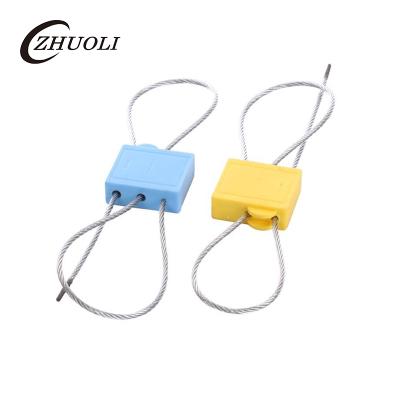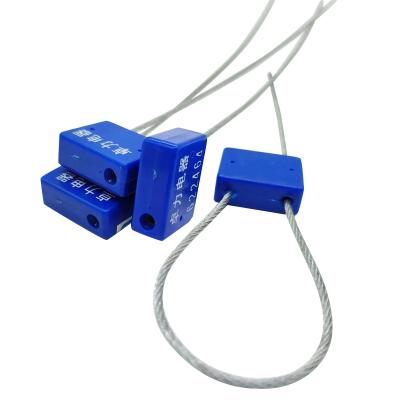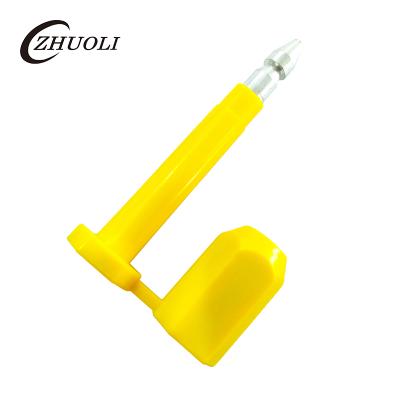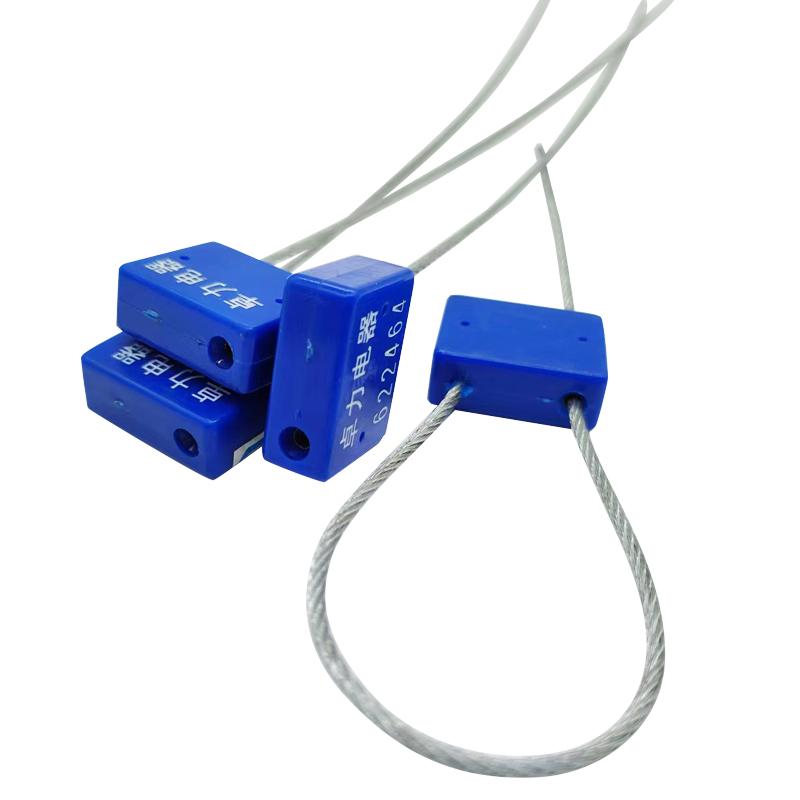
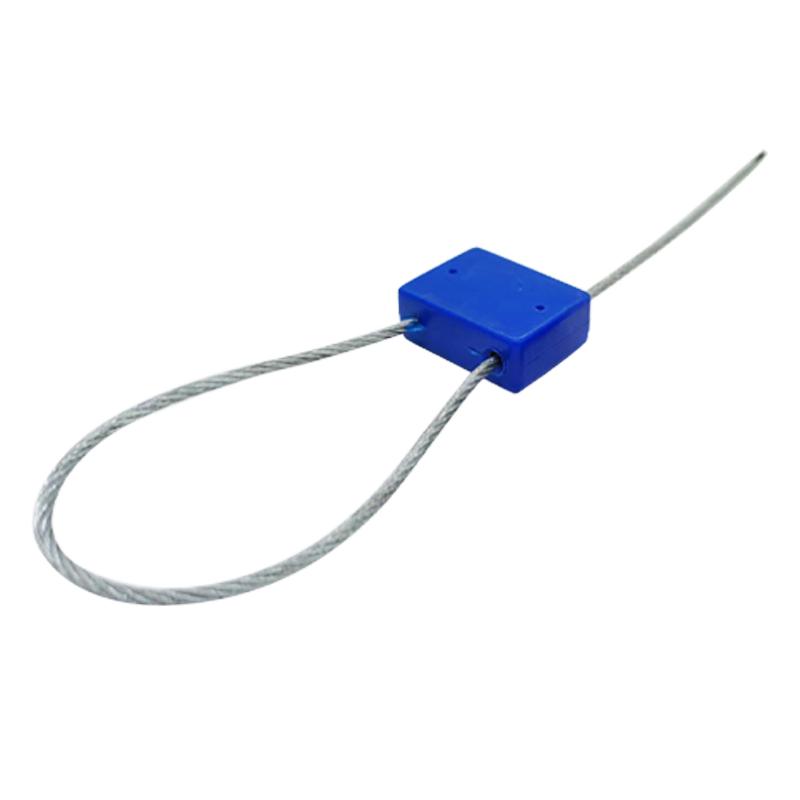
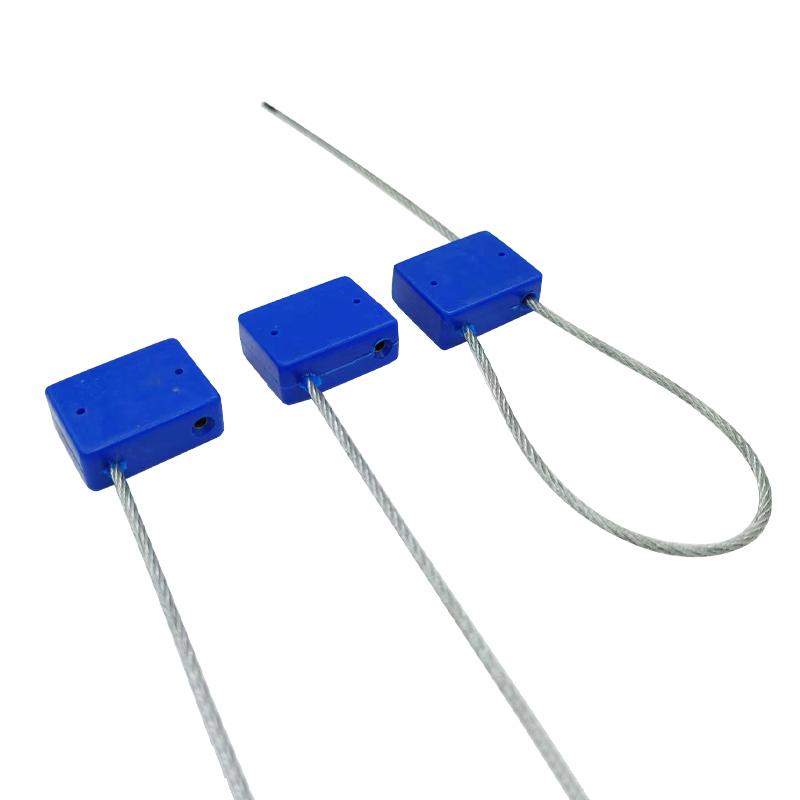
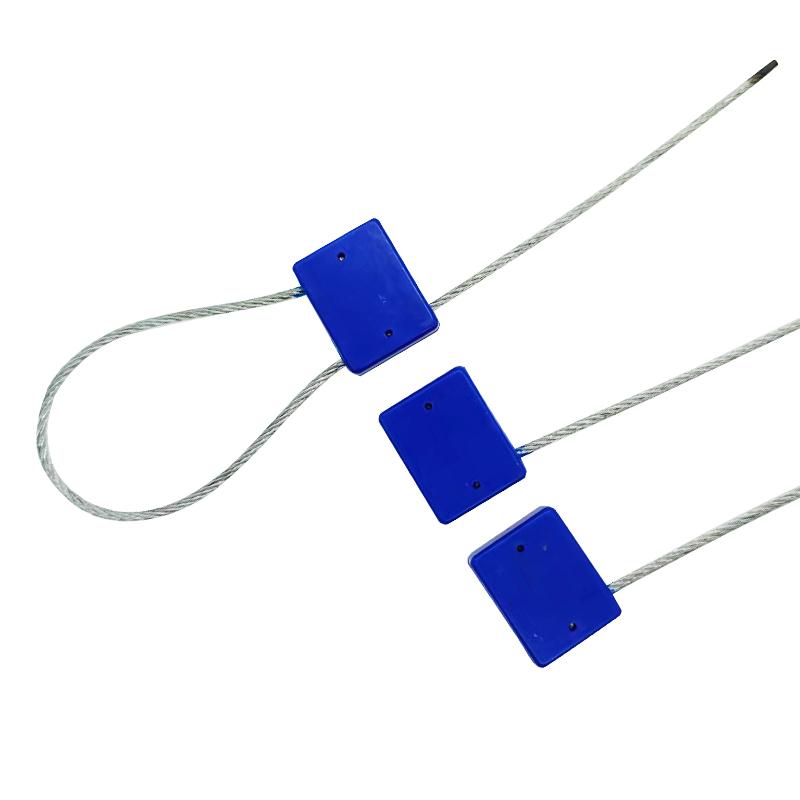
Cable Lock Seals
Product advantages.
Wide differ of applications, easy to apply and seal, handy to operate without the aid of tools
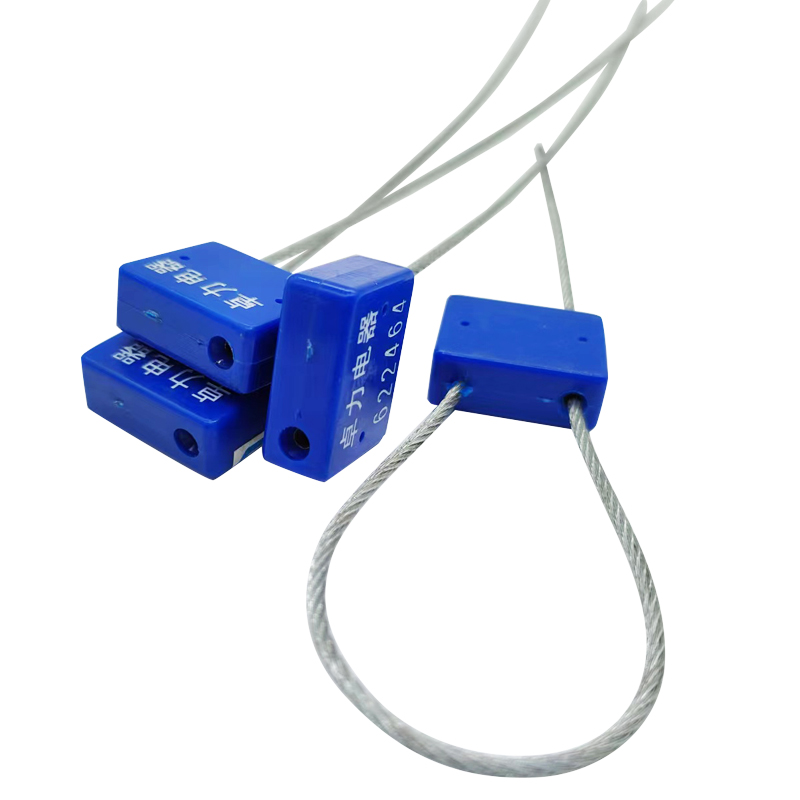
Hot stamping or laser printing of logo, barcode and code
High tensile strength, not to be damaged and decrease off
Effective temperature range -40℃ to 110℃
Color: red, orange, yellow, green, blue, white, gray, black, etc. or according to customer requirements
Model
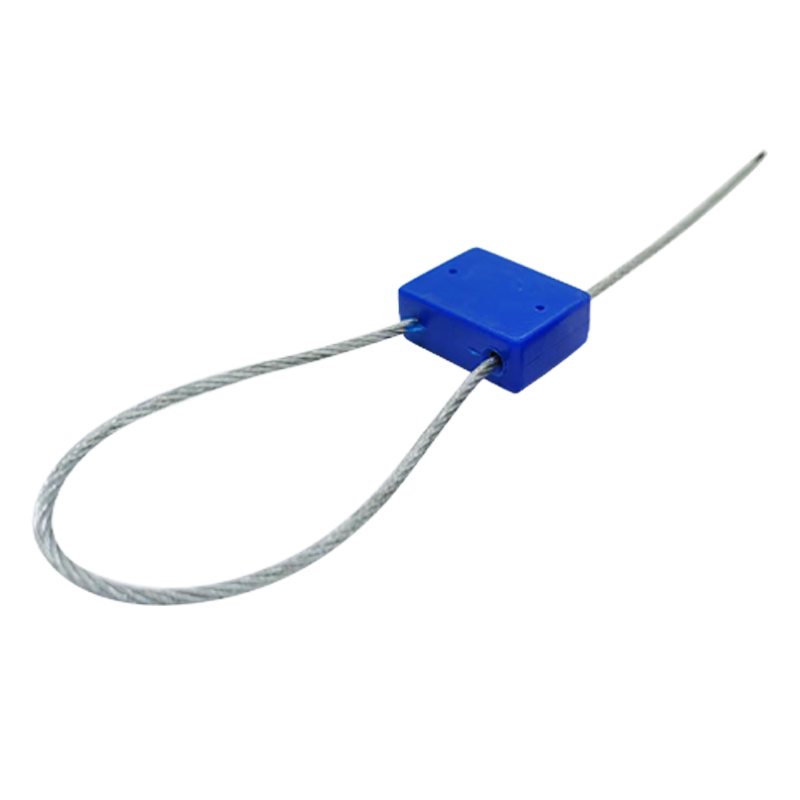
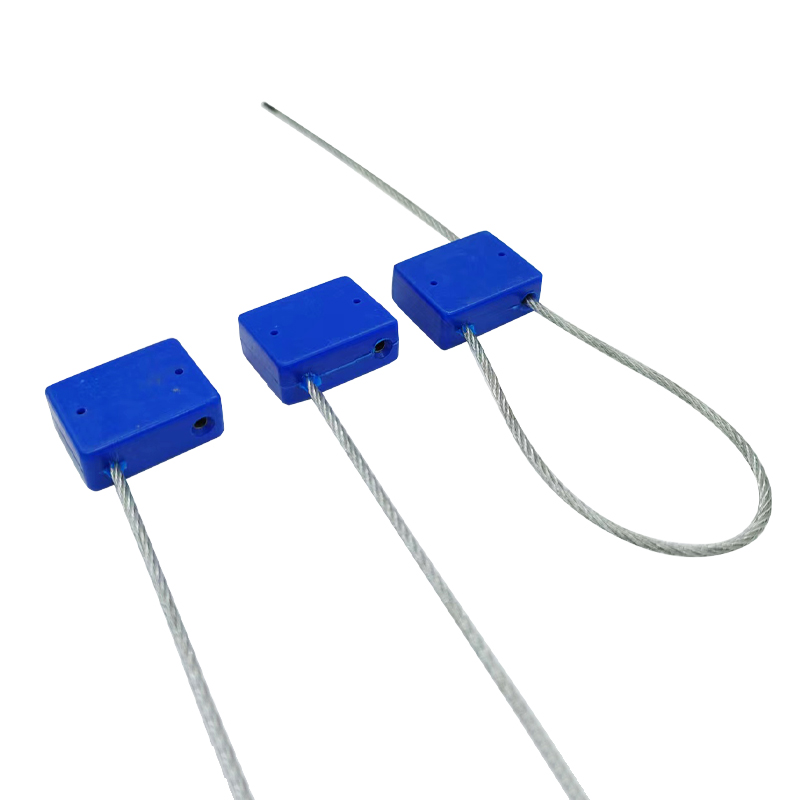
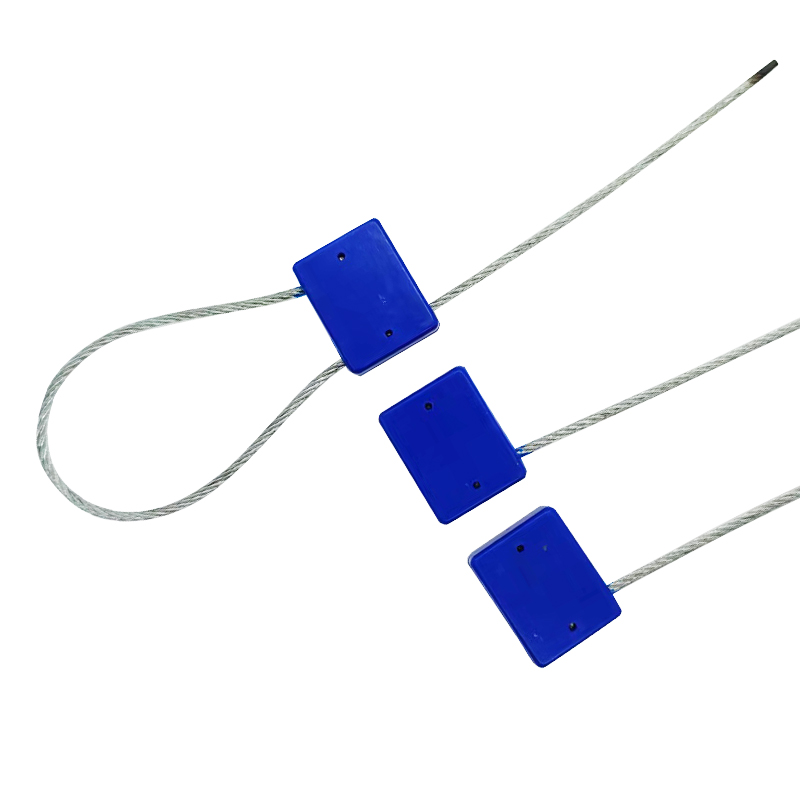
Structure: There is a combination of steel wire and lock body, ABS + metallic wire rope
Use: The product is suitable for all kinds of containers, container trucks, electric powered powered meters, water meters, scientific instruments, ordnance, container short-distance transport, trucks, trailers freight, fire equipment seal, distinctive seal railroad and other fields
Shipping: 100pcs/pack, 10 packs/box
Service: can be customized length, color
Logo, serial number, barcode and logo can be printed according to user requirements.
Cable Lock Seals, also commonly referred to as steel wire seals, represent a premium category of tamper-evident security devices engineered to meet the most demanding protection challenges. Unlike standard plastic seals, these robust security solutions combine the flexibility of a steel cable with the unyielding strength of a metal locking body, creating a barrier that is exceptionally difficult to breach without leaving definitive evidence. For B2B buyers in sectors where the cost of failure is immense—from petroleum transportation to international customs—understanding the extensive application range and technical superiority of high-security cable seals is a critical component of risk management and operational integrity.
Technical Superiority and Key Features
The widespread adoption of cable lock seals across these diverse fields is due to a set of definitive technical advantages that outperform other sealing technologies.
Robust Material Construction: A typical high-security cable seal consists of a galvanized steel wire cable, often coated with a protective layer like nylon for added corrosion resistance. This cable is threaded into a lock body made of hardened steel or zinc alloy, creating a unit with exceptional overall tensile strength.
Flexible yet Secure Design: The steel cable offers unparalleled flexibility, allowing it to be used on equipment with small, irregular, or widely spaced lock holes, such as those found on tank vessels and certain scientific instruments. This flexibility does not come at the cost of security, as the cable itself is resistant to cutting and sawing.
Tamper-Evident Locking Mechanism: The core of the seal's security is a one-way, irreversible locking mechanism inside the metal body. Once the cable tip is inserted and pulled tight, it is mechanically locked in place. Any attempt to remove the cable will result in its destruction or leave clear, visible marks on the lock body, providing indisputable tamper evidence.
Customization for Traceability: To support rigorous audit trails, cable lock seals can be customized with unique sequential numbering, barcodes, QR codes, and company logos via laser etching or stamping. This allows for seamless integration into digital asset management and track-and-trace systems.
The Critical Role in Supply Chain Integrity
For a B2B buyer, procuring cable lock seals is an investment in supply chain transparency and loss prevention. The unique identifier on each seal creates a powerful chain-of-custody record. When a seal is applied, its number is recorded in a manifest. Upon arrival, the recipient verifies this number and inspects the seal for integrity before breaking it. Any discrepancy immediately flags a potential security breach, enabling swift investigation and accountability. This simple process is a cornerstone of modern logistics, helping to deter theft, prevent fraud, and ensure that products reach their end-user exactly as the manufacturer intended.
Unmatched Versatility: Core Industries and Applications
The fundamental design of the cable lock seal lends itself to a remarkably broad spectrum of uses. Its flexible yet high-tensile steel cable can be threaded through various locking points that would be inaccessible to rigid seals, making it the go-to choice for complex sealing scenarios.
Logistics, Transportation, and International Trade
The seamless movement of goods across borders relies on verifiable security. Cable Lock Seals are mandated or highly recommended for securing:
Shipping Containers and Container Trucks: Ensuring that door mechanisms on ocean freight and long-haul transport remain untouched from origin to destination.
Tanker Trucks and Rail Car Doors: Protecting high-value or hazardous materials like chemicals and fuels during transit, a critical application within the petrochemical industry.
Airline Cargo and Short-Distance Trailers: Providing a reliable seal for less-than-container-load (LCL) shipments and final-mile logistics.
Energy, Utilities, and Critical Infrastructure
Revenue protection and public safety are paramount in this sector. Cable seals are extensively deployed for:
Electricity Meters, Water Meters, and Gas Meters: Preventing tampering and unauthorized access that leads to revenue loss for utility companies.
Valves and Piping in Petrochemical Plants: Ensuring that critical process controls have not been altered, which is essential for operational safety and environmental compliance.
Firefighting Equipment and Scientific Instruments: Securing life-saving and precision equipment from misuse or vandalism.
Government, Defense, and Finance
In high-stakes environments where accountability is non-negotiable, cable lock seals provide the necessary level of security:
Customs and Border Protection: Used by government agencies to seal inspected cargo, ensuring compliance with import/export regulations.
Armament and Military Equipment: Safeguarding sensitive assets and storage areas.
Financial Transport and Confidential Documents: Securing bags and containers used for cash-in-transit or sensitive data transfer.
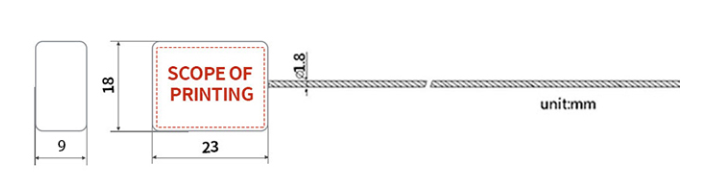
Material | ABS covered+steel lock body+galvanized steel wire |
Colour | Red.greenwhite,yellowblue and etc |
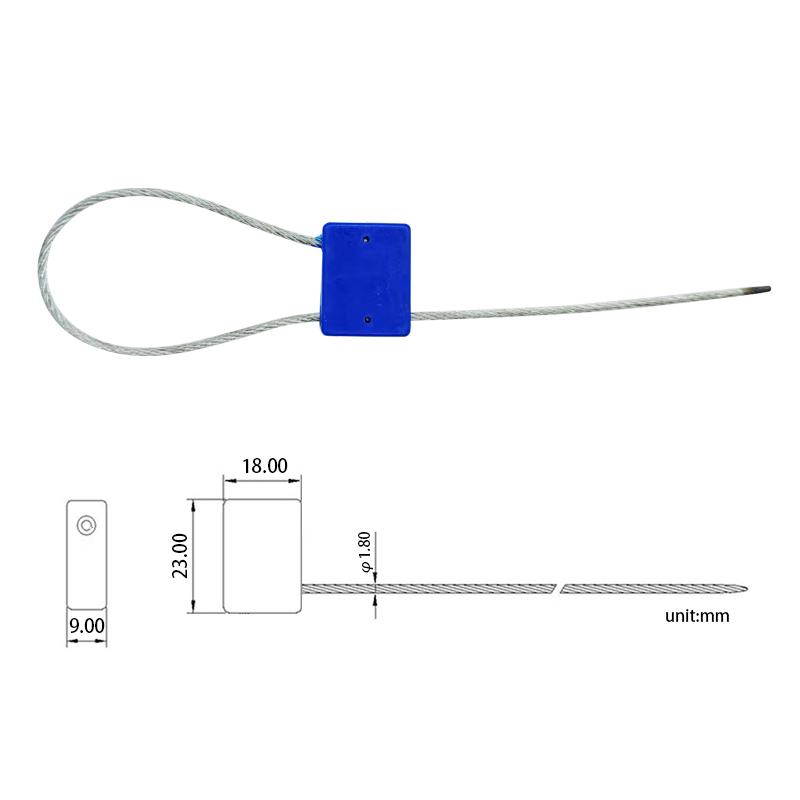
look sixe | 23X18X9mm |
Diameter | 1.5mm/1.8mm |
Length | 240mm or any length as required |
Printing | Hot stamping or laser printing of signs, barcodes and codes |
Certificate | SO4500:2018SGSISOI4001:2015SO9001:2015 |
Application | custom container tan truckvantruckoil tankrailwavtrain container cargo,postcourierexpressbankFire extinguisher |
Frequently Asked Questions (FAQ) for B2B Buyers
1. Can cable locks be reused?
No, virtually all cable lock seals are designed as one-time-use, tamper-evident devices. The act of removing them requires cutting the cable or destroying the lock body, which provides clear evidence of tampering. Reusability would compromise their primary function as a trustworthy security indicator.
2. How do I choose between a plastic seal and a cable lock seal for my application?
The choice depends on your security assessment. Use standard plastic security seals for low-to-medium risk applications, internal packaging, or where cost is a primary driver. Opt for cable lock seals when you require maximum physical security, flexibility in application (e.g., small lock holes), and durability in harsh outdoor or industrial environments. They are essential for high-value goods, international shipping, and critical infrastructure.
3. Are there industry-specific standards for these seals?
Yes, for certain applications. The most recognized international standard is ISO 17712, which sets benchmarks for the mechanical strength and tamper-evidence of seals used in international freight containers. When sourcing cable locks for container security, it is critical to specify seals that are tested and certified to the ISO 17712 standard to meet customs requirements.