Container Bolt Seals vs. Cable Seals: Which is Better?
In the critical realm of containerized cargo security, the choice of a sealing device is a foundational decision. The debate between container bolt seals and cable seals is a common one among logistics professionals. However, framing the question as “which is better?” is often misleading. The more precise and professional inquiry is: “Which is the right tool for this specific application?” Both are high-security seals serving the core function of tamper-evidence, but their design philosophies cater to different operational realities. This article provides a detailed, side-by-side technical comparison to empower B2B buyers, shippers, and security managers to make the optimal selection based on cargo, container type, and compliance needs.
Defining the Contenders: Core Design Philosophy
Understanding the fundamental design difference is key to choosing between a bolt seal and a cable seal.
Container Bolt Seal (The Rigid Guardian):
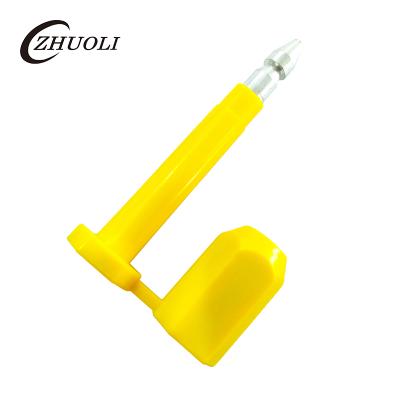
Design: Features a solid, hardened steel pin (bolt) that locks permanently into a fixed, robust body (collar). It forms a rigid, straight assembly.
Analogy: Think of a deadbolt. It’s strong, straightforward, and provides immense resistance to force along its axis, but it requires aligned mounting points.
Primary Strength: Tensile and Shear Strength. It is engineered to resist being pulled apart or cut.
Cable Seal (The Flexible Sentinel):
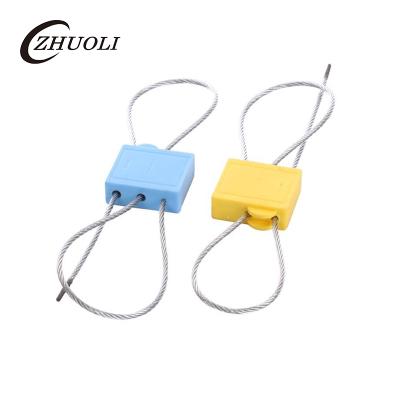
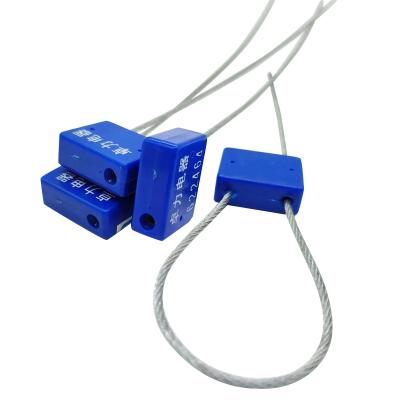
Design: Comprises a stranded or braided steel cable looped through a locking head. The cable provides flexibility, while the lock body secures the ends.
Analogy: Think of a high-strength bicycle lock. It can wrap around irregular shapes and through multiple points, offering versatility.
Primary Strength: Flexibility and Versatility. It maintains high tensile strength while adapting to non-standard securing points.
Head-to-Head Comparison: Key Decision Factors
Feature | Container Bolt Seal | Cable Seal |
Primary Application | Standard intermodal container doors (dry van, reefers). | Non-standard hatches, tank containers, bulk heads, internal compartments, irregular hasps. |
Security Profile | Excellent brute-force resistance. Superior shear strength due to solid bolt; harder to cut with bolt cutters. Highly tamper-evident due to rigid structure. | Very high tensile strength, but cable can be more vulnerable to specialized cutting tools if not high-quality. Tamper evidence is clear upon cutting. |
Ease of Application | Simple, but requires the two door hasps to be perfectly aligned for the bolt to pass through smoothly. | Highly flexible; easy to thread through misaligned, multiple, or recessed securing points. |
Environmental & Durability | Robust, but if the bolt or body corrodes, it can seize. Full metal construction offers good weather resistance when coated. | Flexibility allows it to withstand vibration and door movement without stress. Cable can wear if abraded, but stainless steel options resist corrosion. |
ISO 17712 “H” Certification | The industry standard for container doors. Widely available and expected by carriers/insurers. | Can also achieve ISO 17712 “H” certification, with strength tests focused on the cable assembly. Essential for high-risk flexible applications. |
Cost Consideration | Generally cost-competitive for their intended, high-volume application. | Can be slightly higher due to the complexity of the cable and lock assembly, but justified by their unique utility. |
Detailed Analysis: When to Choose Which Seal?
The Case for the Container Bolt Seal: The Default for Standard Doors
Choose a high-security bolt seal when your primary need is to secure the doors of standard ISO shipping containers.
Unmatched for Its Purpose: For the common container door seal application, the bolt seal is purpose-built. Its rigidity is an advantage, preventing “working” or loosening during transit.
Compliance and Expectation: It is the universally recognized and expected seal for deep-sea freight. Using a Zhuoli ISO 17712 certified bolt seal satisfies carrier contracts and insurance requirements seamlessly.
Optimal Strength-to-Volume Ratio: It provides maximum shear resistance in a compact form factor, making it the most efficient security solution for aligned hasps.
Ideal Use Cases: Dry cargo containers, refrigerated containers, general merchandise shipping, and any scenario where the cargo is loaded through the standard rear doors.
The Case for the Cable Seal: The Specialist for Complexity
Choose a high-security cable seal when flexibility is a non-negotiable requirement.
The Only Option for Many Applications: For tank container seals (manhole covers, valves), bulk container hatches, or securing internal doors within a container, a bolt seal is physically impossible to apply. The cable seal is not an alternative here; it is the only solution.
Solving Real-World Problems: Container doors can become misaligned due to impact or wear. A flexible security seal can be applied where a rigid bolt would not fit, preventing costly loading delays.
Securing Non-Standard Assets: Beyond containers, they are perfect for securing rolling stock, generator compartments, or bundled equipment on flat-racks.
Ideal Use Cases: ISO tank containers, bulk carriers, open-top containers, secured internal pallets, heavy machinery, and as a versatile tamper-evident seal for logistics assets with complex locking points.
Beyond the Binary: Common Misconceptions and Best Practices
Myth: Cable Seals are Weaker. A high-quality, ISO-certified cable seal made with a thick, matching or surpassing many bolt seals. The vulnerability is shear (cutting), not tension (pulling apart).
Myth: Bolt Seals are Obsolete. Far from it. For their core application, they remain the most efficient, cost-effective, and compliant choice.
The Golden Rule: Match the Seal to the Risk and Physical Reality. Always conduct a site-specific assessment. Don’t try to force a bolt seal onto a tank hatch, and don’t use a cable seal on a standard door simply because it’s on hand, unless necessary.
The Unifying Factor: Certification is Key. Regardless of type, for protecting valuable cargo, insist on ISO 17712 “High Security” certified seals from a reputable manufacturer. This ensures the chosen device has passed independent destructive testing.
Conclusion: It’s About the Right Tool for the Job
The question is not bolt seals vs cable seals, but standard doors vs. non-standard closures.
For the vast majority of container shipments moving through global ports, the container bolt seal is the superior, optimized, and expected choice. It is the workhorse of container security.
For the critical minority of shipments involving tanks, bulk goods, or complex securing needs, the cable seal is the indispensable specialist. It provides essential security where the bolt seal cannot function.
A sophisticated security strategy employs both. Leading suppliers like Zhuoli offer comprehensive ranges of both high security bolt seals and heavy-duty cable seals, all backed by the requisite certifications. The mark of a professional operation is knowing which one to pull from the box for any given shipment.
Equip Your Team with the Right Tool for Every Task.
Audit your container fleet and typical cargo. Do you have the appropriate mix of rigid and flexible high-security seals?
Explore Zhuli’s dual-range of ISO 17712 certified sealing solutions. Our experts can help you analyze your logistics profile and build a cost-effective, compliant sealing strategy that uses bolt seals where they excel and cable seals where they are essential. Request a comparative sample kit today to see and test the difference firsthand.