Tamper Proof Wire Seals: The Flexible Guardian of Global Supply Chains
In the critical pursuit of cargo integrity and asset security, tamper proof wire seals have established themselves as an indispensable solution for complex securing challenges. For B2B buyers in logistics, manufacturing, and high-value transport, understanding the specific advantages and applications of these flexible security seals is key to implementing a robust and compliant security protocol. Unlike their rigid bolt seal counterparts, tamper evident cable seals offer unique versatility, making them the preferred choice for a wide range of non-standard securing points. This article delves into the technical specifications, industry applications, and procurement considerations for these essential security devices.
The Niche and Necessity of Wire Seals in Security
The global logistics security market demands solutions that adapt to real-world complexity. While bolt seals are ideal for standard container doors, countless assets—from tanker hatches and utility meters to internal cage doors and bundled goods—feature irregular shapes, multiple securing points, or limited access. This is where the tamper proof wire seal excels. Its fundamental design, featuring a high-strength steel cable looped through a locking mechanism, provides the flexibility needed for these applications without compromising on security. Their growing adoption is driven by stringent supply chain security protocols, insurance requirements, and the universal need for reliable tamper evidence.
Core Features and Technical Advantages
The effectiveness of a high security wire seal is determined by its construction and engineering. Key features that B2B buyers must evaluate include:
1. Unmatched Flexibility and Application Range
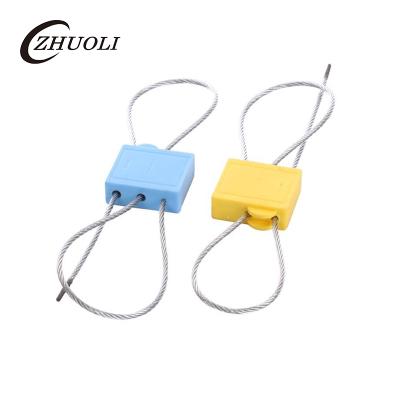
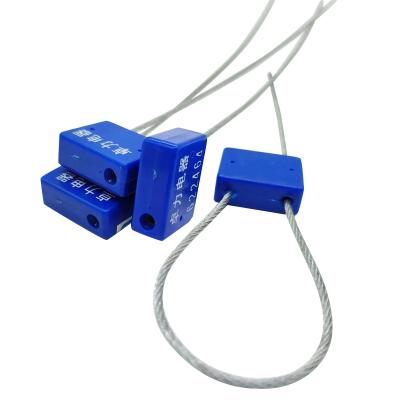
The defining characteristic is the cable itself. Typically constructed from braided or stranded aircraft-grade steel, the cable can be easily threaded around handles, through eyelets, or across multiple hasps. This makes cable seals for irregular shapes an optimal solution for securing:
Tanker truck hatch covers.
Railcar and aircraft cargo door handles.
Valves on chemical or fuel containers.
Internal warehouse storage cages and cabinets.
High-value equipment and machinery during transit.
2. High Tensile Strength and Tamper Resistance
Cable Construction: The braided design not only provides flexibility but also makes cutting with simple tools difficult, as the strands spread and bind against blade edges.
Locking Body: The heart of the seal is a hardened steel or composite locking body. Once the cable end is inserted and locked (often via a ball-lock or collet mechanism), it cannot be extracted without destructively cutting the cable or destroying the lock. Many feature a free-spinning collar to frustrate gripping and twisting attacks.
3. Corrosion Resistance and Durability
Given their use in outdoor and industrial environments, premium wire seals are treated for durability.
Galvanization: A zinc coating provides excellent rust resistance for standard use.
Stainless Steel Options: For highly corrosive environments (e.g., marine transport, chemical industries), seals made entirely of stainless steel components offer maximum longevity.
Weatherproof Locking Mechanism: Seals are designed to keep internal components free from debris and moisture, ensuring reliable operation in diverse climates.
4. Unique Identification and ISO 17712 Certification
For audit trails and compliance, each seal must be uniquely marked.
Sequential Numbering: Laser-etched or embossed unique numbers are standard, allowing for precise tracking on shipping manifests.
Barcode/RFID Integration: Advanced models can incorporate barcodes or RFID tags for automated scanning and integration with cargo tracking systems.
ISO 17712 "H" Certification: This is the critical benchmark for B2B procurement. ISO 17712 certified wire seals have been independently tested and verified to meet the "High Security" grade for tensile strength, shear strength, and impact resistance. This certification is often mandated by shipping lines, insurers, and international regulations.
Manufacturing and Quality Assurance Process
The production of reliable tamper proof wire seals is a precision operation:
Material Selection: High-carbon steel wire is drawn and stranded to form the core cable. Lock bodies are machined from hardened steel or engineered polymers.
Cable Assembly: The cable is cut to specific lengths (commonly from 300mm to 2m+), and one end is fitted with a permanent stop (a metal barrel or ball). The opposite end is finished for clean insertion.
Lock Mechanism Assembly: The locking body incorporates the internal locking jaws, springs, and any anti-tamper features. This sub-assembly is crucial for performance.
Surface Treatment: Components undergo galvanizing, plating, or painting for corrosion protection.
Marking & Individual Testing: Each seal is sequentially numbered. A statistical sample from each batch undergoes destructive tensile testing to ensure compliance with rated strength and ISO 17712 standards.
Primary Industry Applications and Use Cases
Tamper evident wire seals are the go-to solution across multiple verticals:
Transport & Logistics: Securing air cargo unit load devices (ULDs), non-standard trailer doors, and internal compartment hatches on ships.
Energy & Utilities: Sealing electric meter panels, telecom cabinets, and pipeline valves to prevent unauthorized access and tampering.
Retail & Distribution: Securing high-value roll cages, garment containers, and warehouse fire exits.
Cash-in-Transit & Banking: Sealing ATM cassettes and cash deposit bags.
Aviation & Aerospace: Securing sensitive equipment panels and flight cases.
Market Trends and Future Developments
The market for wire security seals is evolving with technology:
Smart Wire Seals: Integration of RFID and GPS technology into the locking body is on the rise, creating electronic wire seals that provide real-time tamper alerts and location data.
Enhanced Material Science: Development of stronger, lighter composite materials for the locking body increases durability while reducing weight.
Sustainability Focus: Manufacturers are increasingly adopting recycled steel and environmentally friendly coating processes in response to corporate sustainability goals.
Conclusion: Securing the Flexible Points in Your Supply Chain
Tamper proof wire seals are not merely an alternative to bolt seals; they are a specialized solution for securing the complex, irregular, and varied points of vulnerability that rigid seals cannot address. Their flexibility, coupled with certified high strength, makes them a critical component of a holistic security strategy.
For B2B buyers, the imperative is clear: source ISO 17712 certified wire seals from reputable manufacturers who can provide full technical documentation and traceability. Assess your specific application needs—cable length, tensile strength, environmental resistance—and choose a product that matches the risk level of the asset being secured.