What is High Security Trailer Seals?
In the interconnected arteries of global trade, where goods traverse continents via road, rail, and sea, the security of cargo in transit is a paramount concern for shippers, carriers, and receivers alike. The trailer—whether attached to a truck, placed on a railcar, or stacked on a vessel—is a critical vulnerability point. Its doors are the primary barrier between valuable cargo and potential loss. While a standard lock provides a basic deterrent, the logistics and transportation industry relies on a more specialized and formidable tool: the high security trailer seal. But what exactly defines this device, and why has it become the non-negotiable standard for protecting high-value or sensitive shipments across international supply chains? This article delves into the definition, specifications, and critical role of high security trailer seals, providing B2B buyers with the knowledge needed to make informed procurement decisions that safeguard their assets.
Beyond the Lock: A Formal Definition
A high security trailer seal is a tamper-evident, single-use locking mechanism specifically designed to secure the doors of freight trailers, containers, and rail cars. Unlike indicative seals (which only show obvious tampering) or security seals (which offer moderate resistance), a high security seal is engineered to offer the maximum level of protection against deliberate, covert, or forceful attempts at entry.
The key distinction lies in formal, independent certification. The term "high security" is not merely a marketing claim; it is a rigorously defined classification under the ISO 17712:2013 international standard. This standard establishes the benchmarks for mechanical seals used in international commerce, testing them against criteria such as tensile strength (resistance to pulling apart), shear strength (resistance to cable cutting), and impact resistance. Seals that pass these stringent laboratory tests are classified as ‘H’ for High Security. Therefore, when procurement specialists seek ISO 17712 certified high security seals, they are sourcing a product with a proven, auditable level of performance.
The Anatomy of Protection: Core Features and Components
Understanding what constitutes a high security trailer seal requires examining its physical and technical attributes. These components work in concert to create a formidable barrier.
Robust Locking Body:
The heart of the seal is its locking mechanism. High-security models utilize a housing constructed from hardened steel or high-grade zinc alloy. Advanced designs incorporate features such as anti-drill plates, free-spinning collars, or complex internal locking geometries that resist picking, prying, and manipulation. This robust construction is essential for tamper-proof trailer door seals.
High-Tensile Strength Cable or Bolt:
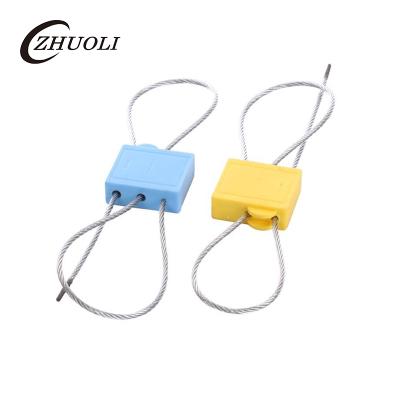
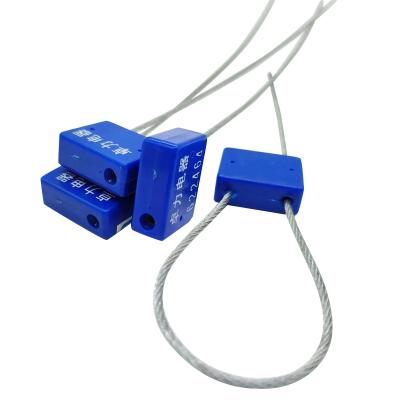
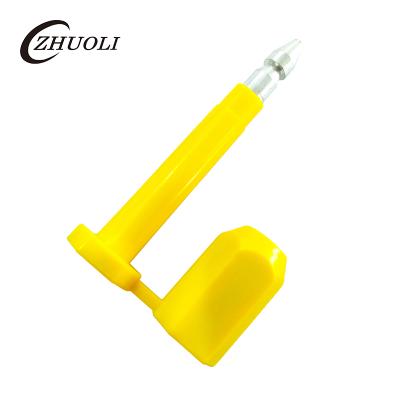
The securing element is typically a multi-strand, steel cable or a solid steel bolt. The cable must have a minimum tensile strength to resist pull-apart attacks. Bolt seals offer superior shear strength, making them extremely difficult to cut with bolt cutters. The material is usually galvanized or otherwise treated for corrosion resistance.
Clear and Irreversible Tamper Evidence:
The primary function is to provide unambiguous proof of interference. Any attempt to open a high security trailer seal without the proper tool will result in permanent, visible damage. This could be a severed cable, a mangled bolt, a shattered lock body, or broken internal components. This evidentiary feature is crucial for drivers, warehouse staff, and security personnel during quick visual inspections at handover points.
Unique Identification and Traceability:
Every legitimate high security trailer seal is permanently marked with a unique, sequential serial number, usually laser-etched for durability. This number is recorded in shipping documents (e.g., the Bill of Lading) and often in digital tracking systems. This creates an unbreakable link between the physical seal on the door and the electronic record, forming the cornerstone of a secure chain of custody for trailer shipments. For enhanced management, seals can be customized with barcodes, QR codes, or company logos.
The Imperative for High Security: Industry Drivers and Risks
The adoption of high security trailer seals is driven by tangible economic and operational risks prevalent in modern logistics.
Cargo Theft and Pilferage: Cargo theft remains a multi-billion dollar global issue. Trailers are targeted at rest stops, unsecured yards, and during transit. A high security seal acts as a powerful physical and psychological deterrent, significantly raising the difficulty and time required for unauthorized access.
Insurance and Compliance Requirements: Many corporate insurance policies and carrier contracts now explicitly mandate the use of ISO 17712 ‘H’ certified seals for full coverage. Using substandard seals can void claims in the event of a loss. Furthermore, customs authorities in many countries recognize these seals as part of a compliant security protocol.
Brand Protection and Liability: Tampering can lead to product contamination, loss, or substitution—especially critical in pharmaceuticals, electronics, and food & beverage sectors. A breached seal provides immediate evidence, helping to isolate incidents and protect brand integrity.
Internal Control and Process Integrity: Seals help prevent unauthorized internal access, ensuring that only authorized personnel at designated points open cargo. This is vital for secure cross-docking operations and inventory control.
The Evolution of the Market: From Metal to Intelligence
The market for high security trailer seals is evolving beyond passive mechanical devices. Key trends include:
Integration with Telematics and IoT: The rise of electronic high security seals (E-seals) is a significant trend. These devices combine a physical barrier with an electronic sensor that can detect door opening and transmit an alert in real-time via GPS/GPS or cellular networks, enabling proactive security.
Focus on Total Cost of Ownership (TCO): Progressive buyers evaluate seals not just on unit price, but on the total cost of a security failure. Investing in certified high security trailer seals mitigates the far greater risks of cargo loss, insurance complications, and supply chain disruption.
Customization for Specific Applications: Demand is growing for customizable trailer security seals designed for specialized equipment like tankers, refrigerated (reefer) trailers, or curtainsiders, addressing their unique vulnerabilities.
Selecting the Right Seal: A Guide for B2B Buyers
For logistics managers and security directors, selecting the appropriate high security trailer seal involves a strategic assessment:
Verify Certification: Always request and validate the supplier’s ISO 17712 ‘H’ certification for the specific seal model. This is the foundation of trust.
Match Strength to Cargo Value: Assess the tensile and shear strength ratings relative to the value and risk profile of your shipments. High-value goods warrant the highest-specification seals.
Consider Environmental Factors: For international or coastal shipping, ensure the seal has adequate corrosion protection (e.g., hot-dip galvanization) to withstand harsh weather.
Evaluate Integration Needs: Determine if your operation would benefit from the real-time visibility offered by electronic seals or if advanced mechanical seals suffice.
Partner with a Reputable Manufacturer: Source directly from established manufacturers with a proven track record in the logistics security industry. They can provide technical support, customization, and consistent quality in bulk orders.