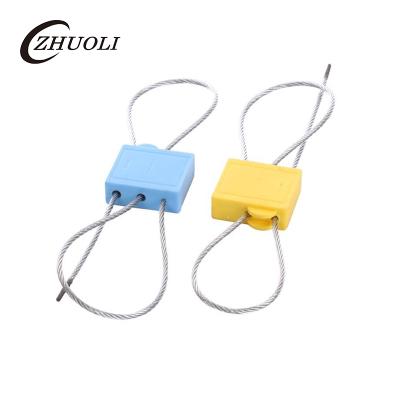
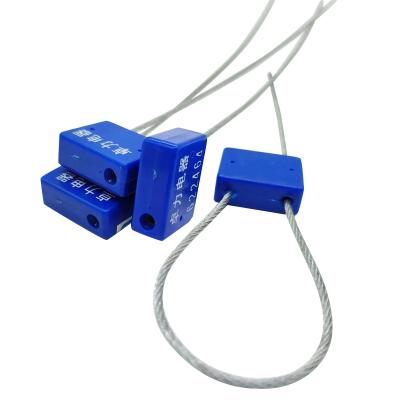
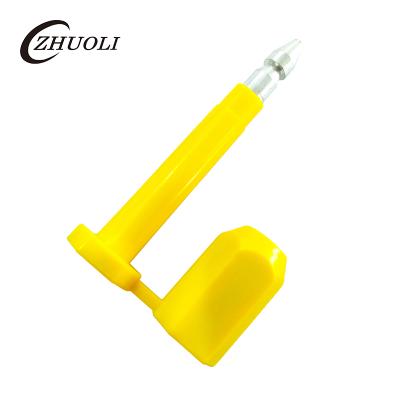
Disposable Aluminum Alloy Cable Seals: A Technical Analysis of Physical Anti-Tamper and Full-Chain Traceability
In the fields of industrial security and logistics loss prevention, physical seals serve as a critical safeguard for supply chain integrity. Their performance directly impacts cargo safety and operational efficiency. Disposable aluminum alloy cable steel seals—with their unique anti-tamper mechanism, high-strength materials, and customizable identification options—are increasingly becoming essential security tools in container shipping, power facility protection, energy asset management, and other high-risk scenarios .
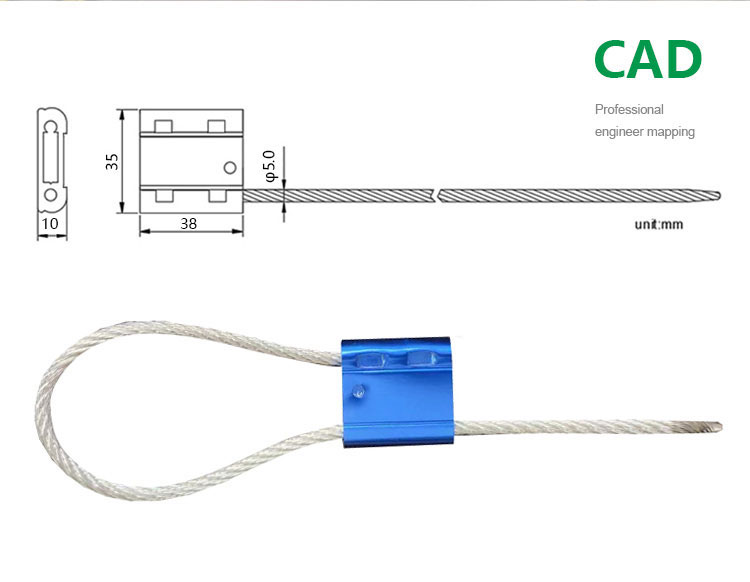
How Disposable Cable Seals Ensure Irreversible Anti-Tamper Security
The security of this product relies entirely on mechanical principles. No electronic components are involved, ensuring exceptional reliability in any environment.
The locking sequence operates as follows:
Locking Process: When the high-strength steel cable is inserted into the lock body and pulled tight, a precision ratchet structure inside engages firmly with the cable surface. This creates a permanent physical lock that cannot be disengaged .
The Only Removal Method: Once locked, any attempt to pull the cable backward only tightens the ratchet's grip. Non-destructive removal is physically impossible. The only way to open the seal is to cut it using hydraulic cutters, bolt cutters, or similar heavy-duty tools.
Irreversible Evidence: Any forced removal inevitably leaves visible, permanent damage—broken lock bodies, deformed cables, or frayed wire strands. These physical marks are impossible to repair or conceal. This provides clear, verifiable proof of whether cargo was accessed during transit, satisfying legal evidence requirements in dispute resolution.
Key Takeaway: Disposable cable seals cannot be opened without leaving damage, nor can they be resealed or counterfeited. This fundamentally eliminates tampering and denial risks.
High-Strength Materials: Tensile Performance and Environmental Resistance
Durability and environmental adaptability result from carefully selected materials and strict manufacturing controls. The table below summarizes key performance specifications:
| Performance Dimension | Technical Specification |
|---|---|
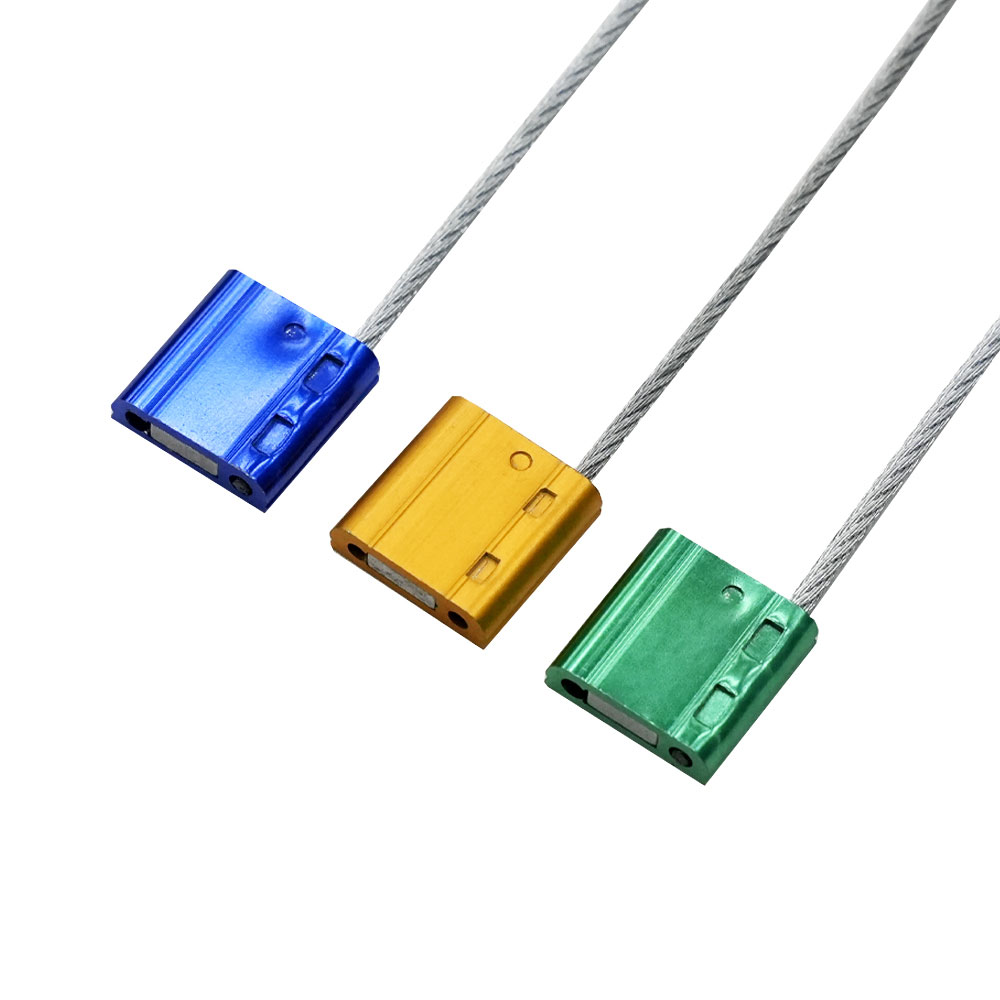
| Lock Body Material | High-strength aluminum alloy—lightweight yet rugged, with anodized color options for visual classification |
| Cable Material | Galvanized steel or aviation-grade wire rope for superior tensile strength and corrosion resistance |
| Tensile Strength | Mainstream models: 100–500 kg; High-end models: >4.5 kN (approx. 450 kgf) —effective against brute-force attacks |
| Operating Temperature | -40°C to +40°C —performs reliably in extreme cold, intense heat, and high-humidity marine environments |
| Chemical Resistance | Excellent alkali resistance for long-term exposure to seawater and industrial chemicals |
| Color Options | Full-color anodization enables visual route/department classification |
Why tensile strength matters: Industry standards (ISO 17712) classify security seals into "H" (high) and "S" (indicative) categories. Cable seals with tensile strength above 4.5 kN qualify for H-level applications, including high-value cargo, pharmaceutical logistics, and critical infrastructure protection.
Barcode & QR Code Customization for Full Supply Chain Traceability
Modern supply chains require each seal to function as both a physical lock and an information carrier. This product supports highly flexible identification solutions:
Information Encoding Options:
Permanent marking via laser engraving or hot stamping
Capable of bearing: corporate logos, serial numbers, text, barcodes (1D), and QR codes (2D)
One Seal, One Code:
Each seal receives a unique identifier, enabling individual traceability. At receipt or transfer points, personnel scan the code to verify identity and cross-reference with shipping documents instantly .
Full-Chain Traceability:
When anomalies occur, the seal code enables rapid identification of the specific batch, route, or responsible party—dramatically improving audit efficiency and reducing investigation time from days to minutes.
Real-world impact: Logistics operators using traceable disposable seals report 85% reduction in unexplained cargo opening incidents, according to industry data .
Anti-Tamper Technology Advancements: Protecting Data Throughout the Lifecycle
Product innovation extends beyond locking strength to include information durability across the entire logistics cycle.
Recent patent developments (CN 118577957 B, 2024) introduce protective structures on the lock body that shield barcodes and QR codes from abrasion during handling and transit [6]. Even if the seal suffers accidental impacts or scuffing, critical identification data remains readable—ensuring accurate traceability throughout the supply chain and enabling precise recall or investigation when needed.
This dual-layer protection—physical security plus data integrity—represents the next evolution in seal technology.