High Security Seal Testing Standards: ISO 17712 Remains the Core, Certification and Test Reports Are Key for Procurement
In the fields of logistics security and supply chain management, high security seals serve as critical tamper-evident devices for containers, trucks, and other transport applications. Their quality testing standards have drawn significant attention. Currently, the international standards system sets clear requirements for the physical performance of high security seals, and relevant enterprises must comply strictly.
Product Overview: Single-Use Tamper-Evident Devices
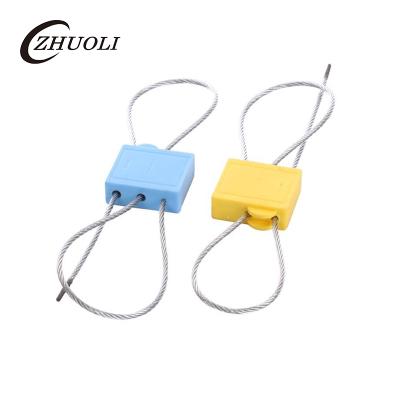
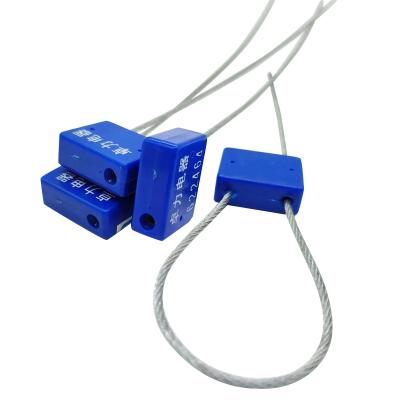
A high security seal is a single-use locking device primarily used in rail, road, maritime, and air logistics. It locks containers, cargo trucks, tankers, and trucks to secure goods during transport. Its core feature is "lock upon application" — it cannot be opened without being destroyed. Once the seal is cut or broken, it cannot be restored to its original state, ensuring cargo is not swapped or stolen during transport or storage.
Each high security seal carries a unique identification number. The lock body surface typically uses laser marking or hot stamping to imprint the company name, logo, and sequential serial numbers. Industry experts note that laser marking offers clearer serial numbers and barcodes compared to traditional hot stamping, significantly improving anti-counterfeiting capabilities.
Structural Design: Clip-Spring Locking Mechanism
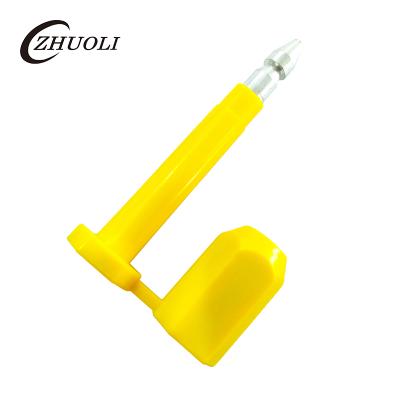
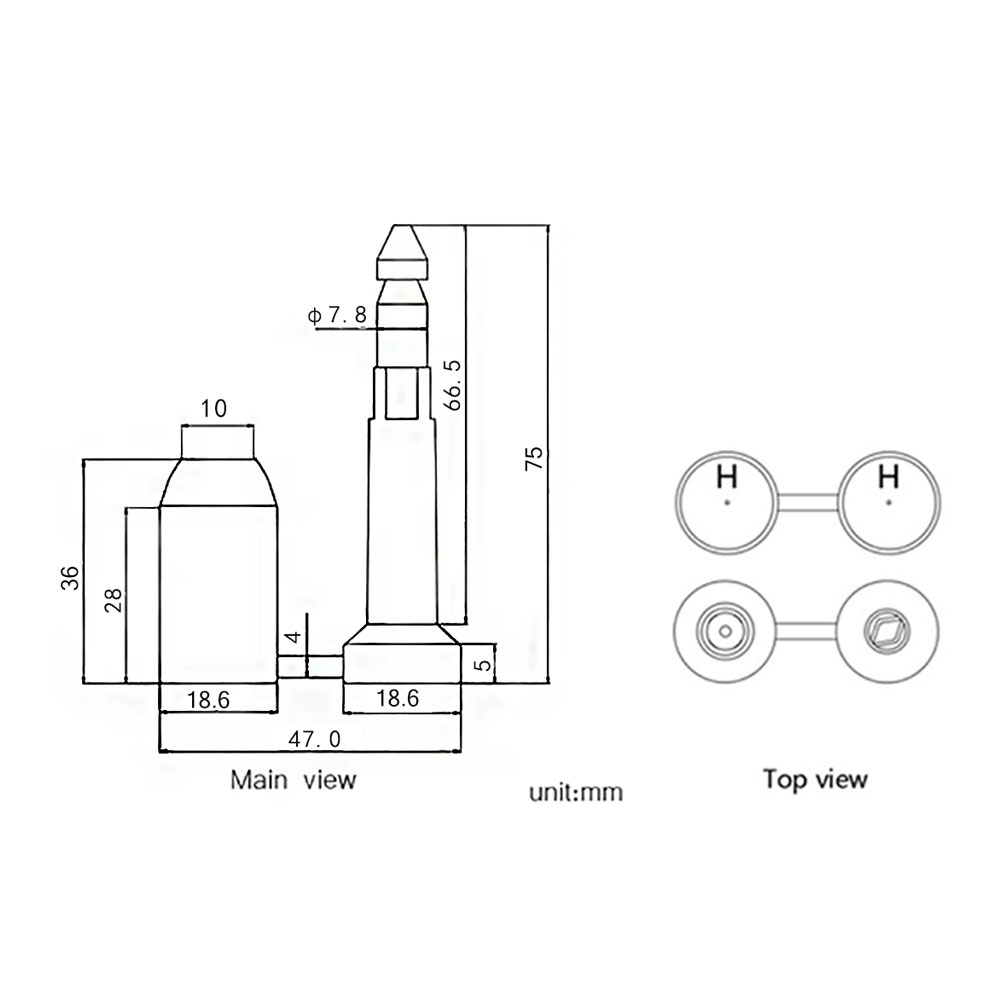
A high security seal generally consists of two parts: the locking rod and the locking sleeve. The locking rod includes an outer shell and an internal steel rod with locking grooves. The locking sleeve contains a lock body, a clamp spring, and a lock cover. The clamp spring matches the locking grooves, and when the locking rod is inserted, the spring snaps into the grooves to lock. The lock body uses a clip-spring structure externally wrapped in ABS plastic, forming a corrosion-resistant, high-hardness seal product.
International Standard: ISO 17712:2013 as the Current Core
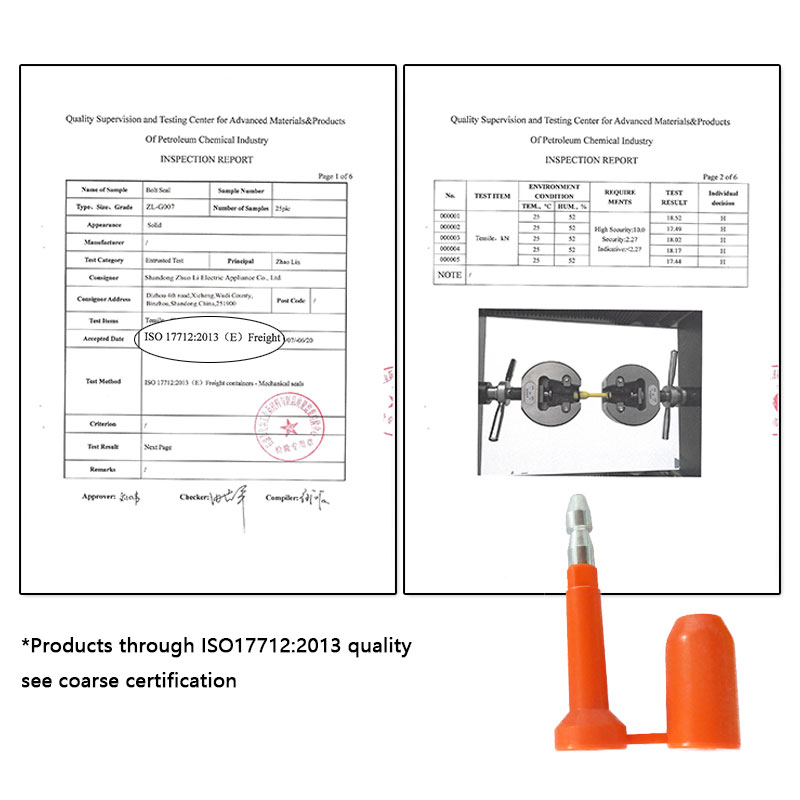
According to industry sources, the core basis for high security seal testing is ISO 17712, with the current effective version being ISO 17712:2013. This standard classifies high security seals into multiple grades, including "High Security" (H-class), and specifies mandatory physical tests:
* Tensile Test: High security products must achieve a pull strength of 10.0 kN or more;
* Shear Test: Shear strength must be no less than 341 kg;
* Bending Test: Must meet strict anti-fatigue cycles or bending moment requirements;
* Impact Test: Must pass impact resistance tests at both ambient temperature (18°C) and low temperature (-27°C).
Domestic Standard: GB/T 23679-2009 as the Current Basis
China's current equivalent standard is GB/T 23679-2009, which is based on the earlier ISO/PAS 17712:2006. This adopted version is relatively outdated. Enterprises producing or procuring domestically still primarily rely on this standard for testing.
Procurement Practice: Certification and Test Reports Are Critical
In tendering and foreign trade procurement, buyers typically require suppliers to provide ISO 17712 certification or third-party test reports (such as SGS). Industry experts caution that when a product claims "compliance with ISO/PAS 17712," it generally refers to the earlier public specification of the standard series. Buyers should pay attention to version differences during procurement.
Strict compliance with current standards and the provision of authoritative certification and test reports remain key for high security seal products to win market trust.