Traditional Cable Seals: The "First Line of Defense" for Cable Transport Security
— Low cost, tamper-evident design, and international standardization keep mechanical seals dominant in transport security
In the field of cable and cargo transport security, despite the rise of smart monitoring technologies, traditional one-time mechanical seals remain the dominant choice for transport security sealing. Industry experts note that for the core need of one-time transport sealing, traditional mechanical seals offer comprehensive advantages in tamper resistance, cost, ease of use, and standardization—making them irreplaceable.


What Are Traditional Cable Seals?
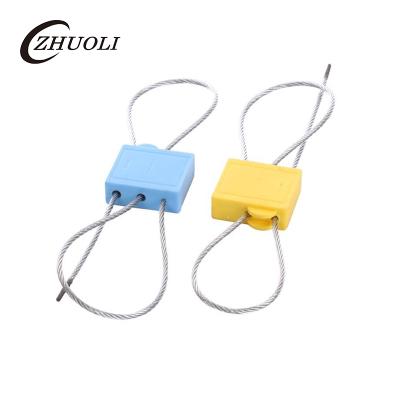
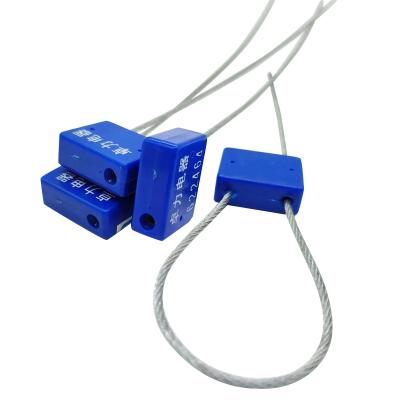
Traditional cable seals are essentially single-use mechanical locking devices. They typically consist of two parts: a lock body and a connecting cable. The lock body is usually made of aluminum alloy or ABS plastic, while the cable is typically galvanized steel wire—balancing strength with corrosion resistance.
The core design principle is one-way locking—once sealed, the lock cannot be retracted and can only be opened by cutting. This means any unauthorized attempt to open the seal will leave irreversible, visible tampering evidence on the lock body. It is this physical characteristic that has made cable seals a widely used anti-theft sealing tool in the transport industry.
Tamper-Evident Principle: Why "Cut to Open" Is More Secure
The tamper resistance of traditional cable seals comes from their one-way locking mechanism. Simply put, once the seal is closed, the internal structure cannot be reversed—the only way to open it is to cut it. This design delivers two direct benefits:
First, traces cannot be faked. Any attempt to illegally open the seal will leave visible damage marks. Inspectors do not need specialized equipment—visual observation alone is enough to determine whether the seal is intact.
Second, no environmental interference. Unlike electronic anti-theft systems that may encounter signal blind spots, electromagnetic interference, or false alarms, mechanical seals do not rely on power or network signals. They maintain stable performance in high temperatures, low temperatures, rain, snow, or rough transport conditions.
Think of it this way: an electronic anti-theft system is like an "electronic sentry" that needs continuous power, while a traditional cable seal is like a "single-use combination lock"—simple, direct, and environment-independent.
Cost and Usage: Why "Lock and Go" Is the Most Economical
From a total cost perspective, traditional cable seals offer clear advantages:
* Low purchase cost: Unit price is far lower than smart monitoring devices, suitable for bulk use;
* Low usage threshold: No installation, no charging, no battery replacement—ordinary workers can operate them quickly;
* Near-zero maintenance: No equipment failures, system maintenance, or software upgrades.
For one-time transport sealing scenarios, this "lock and go, use and discard" model is the most economical and efficient. By contrast, smart monitoring devices, while powerful, require upfront installation and regular maintenance—better suited for long-term fixed installation scenarios.
Identification: How a Single Seal Achieves "One Seal, One Code"
Modern traditional cable seals generally support laser printing or hot-stamping customization, allowing company logos, unique serial numbers, and even QR codes to be printed on the lock body—achieving "one seal, one code" precision management.
This feature may seem simple, but it greatly improves logistics management efficiency. Logistics companies can quickly record and verify seal information, and precisely trace responsibility in case of anomalies. For example, when cargo arrives at its destination, workers can simply scan the QR code on the seal to verify that the seal information matches what was recorded at dispatch—ensuring both security and management efficiency.
International Standards: Why ISO 17712 Is the "Customs Clearance Password"
For international freight and other high-security scenarios, ISO 17712-compliant high-security (H-class) seals have become the industry standard.
ISO 17712 is the global standard developed by the International Organization for Standardization for freight seals. It classifies seals into three categories:
* Class I (Indicative): Basic tamper evidence;
* Class S (Security): Medium protection;
* Class H (High Security): Highest protection level.
Among these, H-class seals must undergo physical strength testing by independent laboratories and manufacturing process audits. They are widely recognized by customs authorities worldwide. For international freight destined for the United States, the European Union, and high-risk regions, C-TPAT (Customs-Trade Partnership Against Terrorism) explicitly requires the use of H-class high-security seals. This means ISO 17712 compliance is not just a mark of product quality—it is a "customs clearance password" for cross-border logistics.
Application Scenarios: Where Are Traditional Cable Seals Used?
Traditional cable seals have a wide range of applications, primarily including:
* Transport vehicle sealing: Containers, trucks, tankers, railway cars, etc.;
* Fixed equipment anti-theft: Electricity meter boxes, fire extinguisher cabinets, etc.;
* Other scenarios: Any situation requiring one-time locking with visible opening evidence.
Whether for long-distance cross-border transport or short-distance urban delivery, whether for bulk cargo or precision equipment, traditional cable seals provide reliable anti-theft sealing solutions.
Smart Solutions Are Rising—Why Traditional Seals Remain Irreplaceable
In recent years, for long-term anti-theft monitoring of installed cables, electronic anti-theft systems combining BeiDou/GPS positioning, NFC electronic tags, and smart monitoring circuits have emerged. These solutions offer real-time alarms and precise positioning, showing significant results in construction and municipal engineering scenarios.
However, industry experts point out that smart monitoring systems are mainly suitable for long-term management of fixed installed cables, while for the core need of one-time transport sealing, traditional mechanical seals remain the irreplaceable mainstream choice due to their comprehensive advantages: intuitive tamper evidence, low cost, ease of use, environmental adaptability, and high standardization.
The two product categories serve different positioning and complement each other, together forming the complete landscape of today's cable anti-theft seal market. As the logistics industry continues to develop, traditional cable seals are still being optimized in security, identification, and standardization—continuing to serve as the "first line of defense" for cable and cargo transport security.