Technical Analysis of Disposable Wire Seal Selection: Engineering Impact of Diameter and Length
2026/09/15 08:42
— A systematic review of core parameters, from tensile strength to lock body compatibility
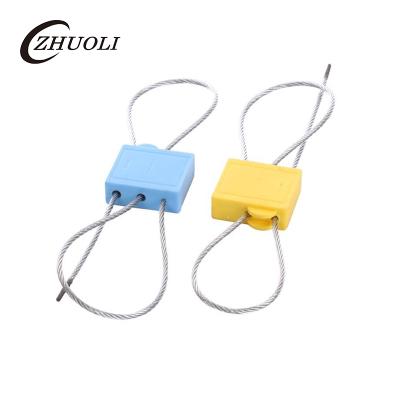
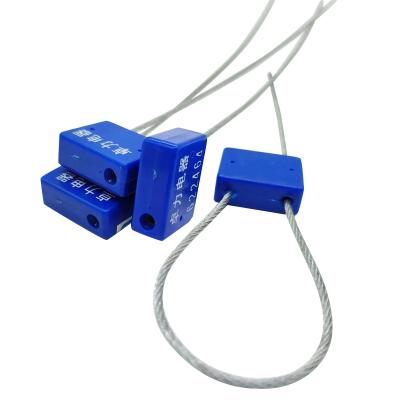
In security-sensitive applications such as logistics transportation, container management, tanker valve sealing, and hazardous materials storage, disposable wire seals serve as mechanical sealing devices critical to tamper prevention, theft deterrence, and status indication. However, specification errors in diameter and length are common in industry practice—ranging from hindered application to complete loss of security function. This article examines the technical impact of these two core parameters from three dimensions: mechanical performance, structural compatibility, and operational efficiency.
1. Diameter: The Decisive Variable for Tensile Strength
The diameter of a wire seal is the primary parameter determining its mechanical performance, directly linked to breaking strength and shear resistance.
1.1 Strength Grades and Typical Values
Diameter Typical Tensile Strength Application Level
Φ1.6mm ≥3KN (approx. 300kg) General logistics
Φ1.8mm ≥3–6KN Standard containers/tankers
Φ4.0mm ≥2KN (cable structure) High-security seals/special applications
In railway industry standards, wire diameter for container locks and tanker locks is explicitly specified at 1.6mm or 1.8mm, with a total length of approximately 230mm and a baseline tensile requirement of F≥300kg. For high-risk applications requiring resistance to hydraulic cutters or violent pulling, cable-structured seals with a diameter of up to 4.0mm provide redundant protection through a thicker cross-section.
1.2 Lock Body Compatibility and Insertion Resistance
Diameter does not exist in isolation—its compatibility with the lock body structure directly affects sealing reliability. The common steel ball detent lock body uses a one-way tensioning mechanism: once the wire is inserted, it can only advance and cannot retract, making it highly sensitive to diameter tolerance:
Oversized diameter: Insertion resistance increases significantly; in severe cases, the wire cannot pass through the lock hole, causing application failure.
Undersized diameter: Insufficient locking ball grip creates pull-out risk.
Surface corrosion: After moisture oxidation, the effective diameter increases, similarly degrading insertion performance.
Therefore, diameter selection requires a balance between tensile strength and lock body compatibility—not simply a preference for thicker wire.
2. Length: Constraints on Application Fit and Seal Integrity
The length parameter determines whether the seal can effectively wrap around the locking point and complete closure. Its impact is reflected in two aspects: application span matching and sealing operational efficiency.
2.1 Application Span Matching
Length Typical Application Technical Consideration
230mm (standard) Railway containers, single-layer door bolts Small locking point spacing, efficient operation
295mm+ (extended) Large container doors, tanker valves, thick pipelines Requires spanning larger gaps or wrapping pipe diameters
Insufficient length prevents the wire from fully passing through the lock body to form an effective closed loop. The seal may detach or leave gaps, resulting in loss of seal integrity. Excessive length redundancy increases the difficulty of cutting and removal during inspection, reducing operational efficiency.
2.2 Sealing Mechanics and Seal Effectiveness
During application, the wire must pass through the lock body and be tensioned until the locking balls engage. A seal of appropriate length ensures sufficient tensioning travel, allowing the lock body and locking point to fit tightly. Insufficient length results in inadequate tensioning travel, low locking force, and susceptibility to being pulled open by external force.
3. Systematic Selection Methodology
Selection of disposable wire seals should follow the three-dimensional principle: "Risk level determines diameter, locking point dimensions determine length, lock body structure determines compatibility."
Risk assessment: Based on the value of the protected asset, theft risk, and potential tampering methods, determine the required tensile strength grade and select the corresponding diameter.
Dimension measurement: Measure the actual locking point spacing or wrapping circumference, reserve 10%–20% operational margin, and determine seal length.
Compatibility verification: Confirm the fit tolerance between the selected diameter and the lock body hole; conduct insertion tests when necessary.
Environmental consideration: In humid or corrosive environments, account for the long-term effects of wire corrosion on diameter and strength.
Conclusion
Although disposable wire seals are low-cost consumables, their selection directly affects the integrity of the logistics security chain. Diameter determines the anti-tampering threshold, length determines operational feasibility, and both interact with lock body structure to form the technical triangle of sealing reliability. Procurement teams are advised to conduct systematic selection based on actual application scenarios, and when necessary, request tensile test reports and application samples from suppliers to ensure that seals perform as expected under real-world conditions.