State Grid Custom Plum-Blossom Brass Padlock: Dominant Legacy Form Factor, Management-Node Role, and Structural Substitution by Smart Lock Control
I. Dominant Legacy Form Factor
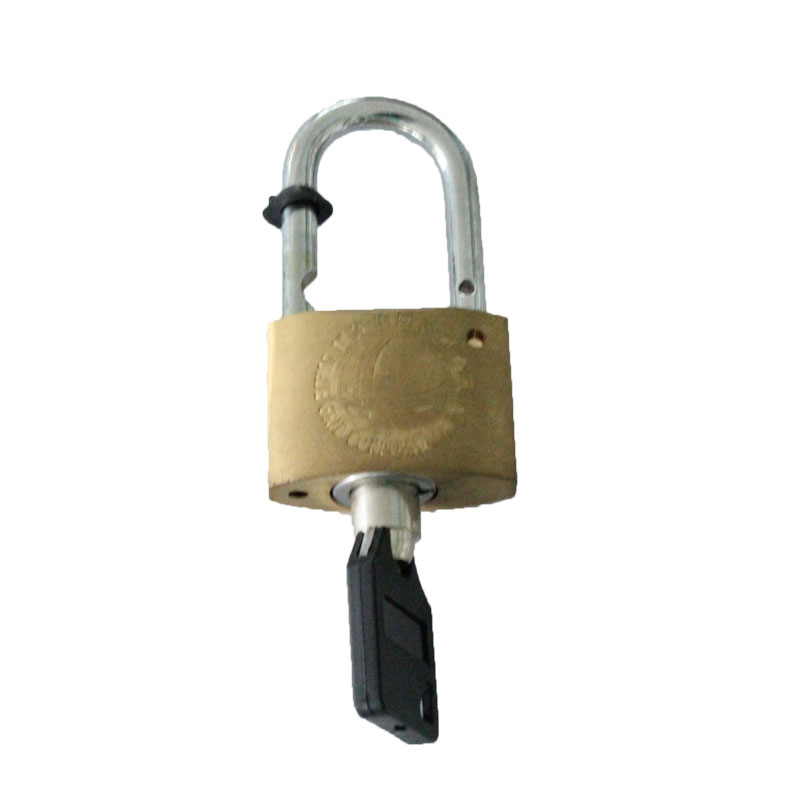
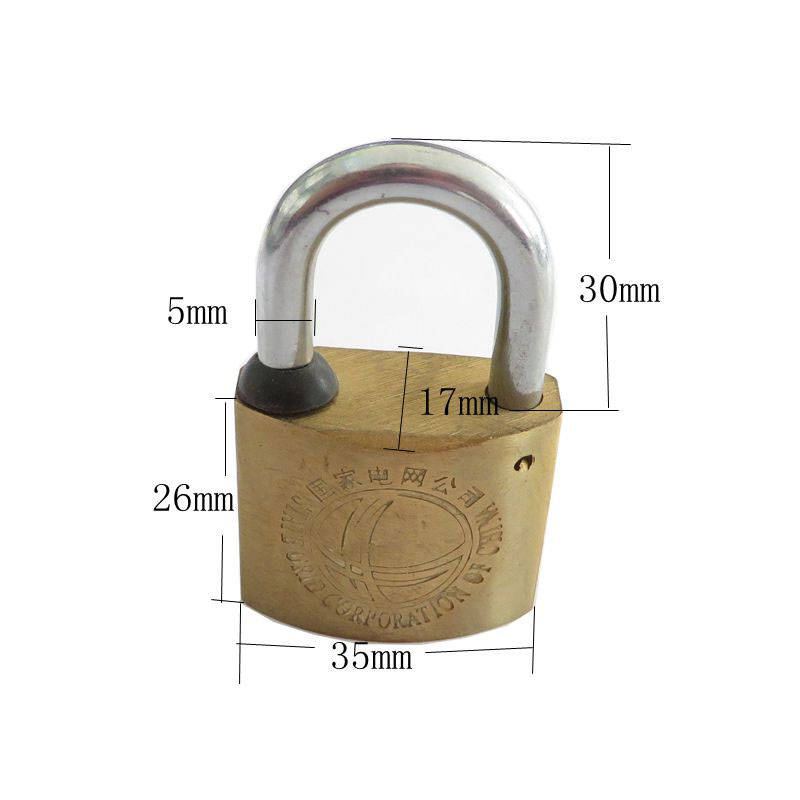
The State Grid custom plum-blossom brass padlock is the mainstream configuration among existing meter-box locks. The lock body measures 35 mm wide and 26 mm high, with a 5 mm shackle diameter and 17 mm shackle clearance. The solid brass body resists rust and corrosion for outdoor use, while the hardened steel shackle improves shear and pry resistance. The body is stamped with the State Grid logo and full Chinese-English name, and the plum-blossom (computer-key) cylinder is paired with a tubular key.
Its core feature is the "keyed-alike" design: one key opens multiple locks in the same batch, with a key ratio of roughly 10%, supporting meter-area O&M efficiency at minimal key-management complexity, at a purchase price of a few to twenty yuan. The shortcomings are equally clear: relatively low cylinder security, easily copied keys, no opening records, and no tiered permission control—once a key is lost or duplicated, electricity-theft risks are hard to trace. A mature custom supply chain has formed for such State Grid-logo locks, which can be stamped with the logo and serial numbers to support large-scale deployment.
II. Management-Node Role
The "three-seal-one-lock" special campaign brings locks into the metering management framework—sealing and locking meter tails, joint terminal boxes, and metering boxes. The integrity of the plum-blossom brass padlock is directly tied to the credibility of metering data; defects are logged in a hazard ledger with close-out management, shifting the logic from reactive "replace when broken" to proactive "inspect and check locks every patrol."
Utilities generally include lock integrity in special inspections and line patrol priorities, registering, resealing, replacing, and reinforcing broken seals or failed locks on site, and building ledgers with clear rectification responsibilities. The lock has evolved from a meter-box accessory into a front-line defense for metering-device integrity—an assessable, traceable management node.
III. Structural Substitution by Smart Lock Control
The flaws of conventional keyed-alike brass locks are driving smart lock control solutions focused on permission control, behavior traceability, and status monitoring. Smart locks use high-strength bodies with embedded coding chips, enabling permission binding and remote control via mobile platforms, with fast unlock response, high forced-entry resistance, long service life, and no frequent battery replacement—directly addressing the mechanical lock problems of "copyable keys, uncontrollable permissions, and no unlock records." Some IoT lock designs add dual verification: after validating a unique management code, the electronic bolt actuates while a door sensor reports box-door status; any mismatch triggers an immediate anomaly upload, distinguishing "lock opened" from "box door normally operated." Other systems achieve remote unlocking and real-time monitoring via "smart metering lock + mobile App."
However, smart-lock rollout is constrained by per-lock cost and the legacy replacement cycle. With tens of thousands of meter boxes, the State Grid custom plum-blossom brass padlock—with low cost, strong environmental adaptability, and no power requirement—will continue to provide baseline protection in the near term. The technical path is more likely a "tiered configuration": smart lock control prioritized in high-value or high-theft-risk meter areas, while general areas retain periodic inspection and seal management of mechanical brass locks. "Structural substitution" means functional supplementation and tiered coverage by smart locks in permission and traceability dimensions—not wholesale replacement.