Small Seals, Big Market: Why Utility Meter Seals Must Pass Africa's "Environmental Test" for Export
That tiny plastic seal on your electricity or water meter might seem insignificant. But in international tenders across Africa, this small component carries a full set of technical requirements — from UV resistance to transparent tamper-evident design. Every detail can determine whether a Chinese manufacturer secures a contract.
As African countries accelerate power grid upgrades and smart water management projects, demand for utility meter seals is rising rapidly. However, Africa's unique tropical climate presents challenges that make these seemingly simple products subject to vastly different technical standards. Below, we break down the product categories, environmental adaptation requirements, and design philosophies that matter most for exporting meter seals to Africa.
Three Types of Seals for Three Different Scenarios
Utility meter seals come in multiple forms, each suited to specific applications and security levels.
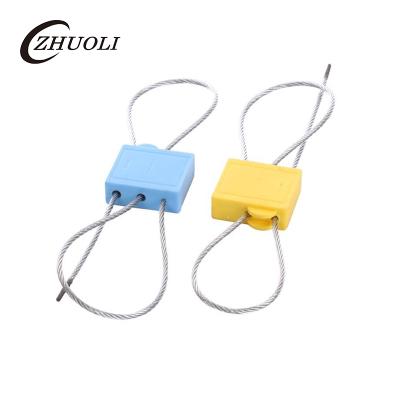
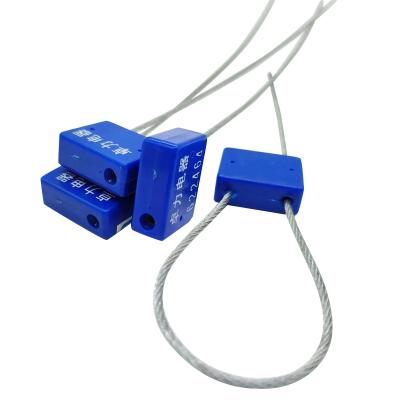
Physical Seals dominate the market, accounting for the largest share. Their principle is simple: a one-time locking mechanism that cannot be opened without visible destruction. Typically injection-molded from engineering plastics with an embedded stainless steel spring clip for enhanced grip, these seals are paired with flexible steel wire or colored nylon ties. They are widely used to secure water meter, electricity meter, and gas meter housings, as well as meter box doors. Key advantages include low cost, quick installation, and broad applicability.
Electronic Seals (RFID Seals) represent a technological upgrade. Built upon a physical locking structure, they incorporate a high-frequency or ultra-high-frequency RFID chip. Each seal carries a globally unique electronic identifier (UID), allowing inspectors to use handheld readers for non-contact scanning to automatically verify seal integrity and identify information. These seals are particularly suitable for smart meters, prepayment water meters, and scenarios requiring digital asset tracking. They offer enhanced anti-counterfeiting protection and enable full lifecycle traceability.
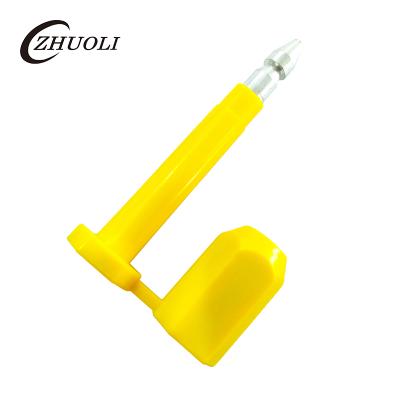
Specialty Seals are engineered for extreme environments. For example, mining areas and oil-gas fields with explosion risks require explosion-proof seals made from flame-retardant, anti-static materials that comply with ATEX or IECEx international standards. For desert and coastal regions with high salt spray and intense sunlight, weather-resistant seals feature dual-injection molding that integrates the protective shell with the internal locking core into a single unit, further enhancing durability.
The First Challenge: Why African Sunlight Can Break Ordinary Plastics
You might wonder: can a small plastic seal really be damaged just by sunlight?
The answer is yes. In Africa, intense ultraviolet radiation can render ordinary plastics brittle and useless within months. UV rays break down polymer molecular chains, causing surface chalking, fading, loss of gloss, and eventually cracks and complete embrittlement — the seal can snap with minimal force. For seals installed outdoors on utility poles, meter boxes, or water meter pits over long periods, this is a critical failure mode.
That's why UV (ultraviolet) stability has become one of the most frequently specified technical requirements in African tender documents. How stringent are the tests? Taking Cape Town, South Africa as an example: products must withstand 1,000 hours of continuous exposure to UVA-340 fluorescent lamps at 60°C — equivalent to more than 41 days of non-stop accelerated aging. After testing, seals must show no cracks, deformation, or significant loss of mechanical strength.
Some projects impose even stricter requirements, adding damp-heat cycling tests that alternate UV exposure with high-humidity condensation phases — simulating Africa's real-world conditions of intense daytime heat followed by nighttime dew formation. This "thermal shock and UV assault" combination pushes material weather resistance to its limits.
Material Matters: Why High-Impact Polycarbonate Is the Industry Standard
Given such harsh environmental conditions, ordinary plastics simply don't make the cut. Reviewing tender specifications across multiple African countries reveals a recurring material requirement: High-Impact Polycarbonate (PC) .
This engineering thermoplastic is favored for three core performance advantages:
Superior impact resistance: Maintains toughness across both high and low temperature ranges, resisting breakage from accidental drops during transportation or tool impacts during installation.
UV aging resistance: Through specialized UV absorbers and light stabilizers, modified polycarbonate effectively resists molecular chain degradation from prolonged sun exposure, significantly delaying material aging.
Dimensional stability: Maintains consistent mechanical properties and size across a wide temperature range from -40°C to +85°C, ensuring long-term locking mechanism reliability.
Additionally, because seals are often used near electrical metering equipment, tender documents strictly require materials to be non-conductive to eliminate any risk of short circuits or electric shock. The typical design service life is 10 years or more — meaning the material must maintain its protective function and legible identification markings throughout a decade of outdoor exposure.
Beyond UV radiation, high humidity in regions like West Africa's tropical rainforests and salt spray along coastal areas pose additional threats. Tender specifications therefore frequently include "dampness and mould proof" and "salt spray resistance" clauses. For instance, products must resist fungal growth at relative humidity above 95%, and metal inserts (such as stainless steel springs) must pass at least 48 hours of neutral salt spray testing without corrosion or jamming.
Transparent Security: Why Clear Seals Are Gaining Popularity
Beyond environmental durability, African markets have a distinctive design preference: transparent seals.
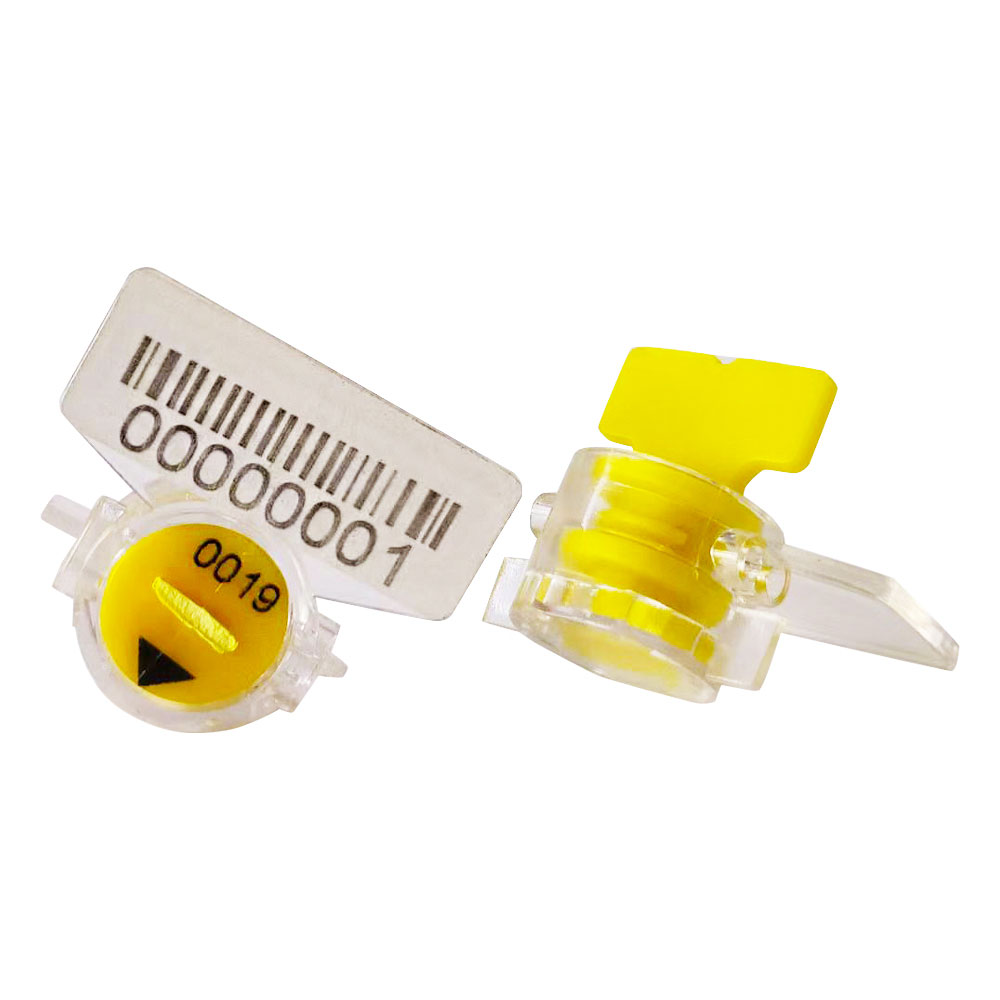
Traditional seals are typically opaque, requiring inspectors to break them open just to check whether the internal locking mechanism has been tampered with. Transparent polycarbonate seals, however, make the internal cavity and locking structure clearly visible at a glance. Inspectors can quickly identify abnormalities without destroying the seal — significantly improving inspection efficiency.
At the same time, tender documents place great emphasis on color coding. Different colors represent different purposes, departments, or meter types, with serial numbers mapped to specific colors for on-site visual identification and streamlined classification management.
Exporting to Africa? Technical Preparation Must Start Early
While meter seals may appear simple, entering the African market demands a multidisciplinary approach spanning material science, environmental engineering, and anti-counterfeiting technology. Industry experts recommend that Chinese exporters front-load their technical response work — well before tender deadlines.
Key steps include:
Engaging internationally accredited third-party testing laboratories (such as SGS, TÜV, etc.) to conduct UV aging, salt spray corrosion, damp-heat cycling, and other required tests.
Preparing comprehensive technical documentation, product datasheets, and physical samples that fully align with each target country's specific standards.
Proactively researching and complying with national standards referenced in tenders, such as South Africa's NRS 096-1 (electricity metering equipment standard) and SANS 474.
Only by thoroughly addressing material selection, manufacturing processes, and rigorous testing validation can this small "lead seal" carry the promise of Chinese manufacturing across the African market.