Security Plastic Seal Length Guide: Choosing the Right Size for Maximum Protection
In the fields of logistics, courier delivery, financial cash transport, and aviation security, the humble security plastic seal plays an increasingly vital role. As global supply chain security standards continue to rise, the specification and applicability of security plastic seal lengths have recently drawn widespread industry attention and discussion. Industry experts point out that selecting the right seal length is not as simple as "the longer, the safer." Instead, it requires precise matching to specific application scenarios to ensure both security and operational efficiency while controlling costs.
Seal Length Determines "Sealing Range" – Smart Selection Matters
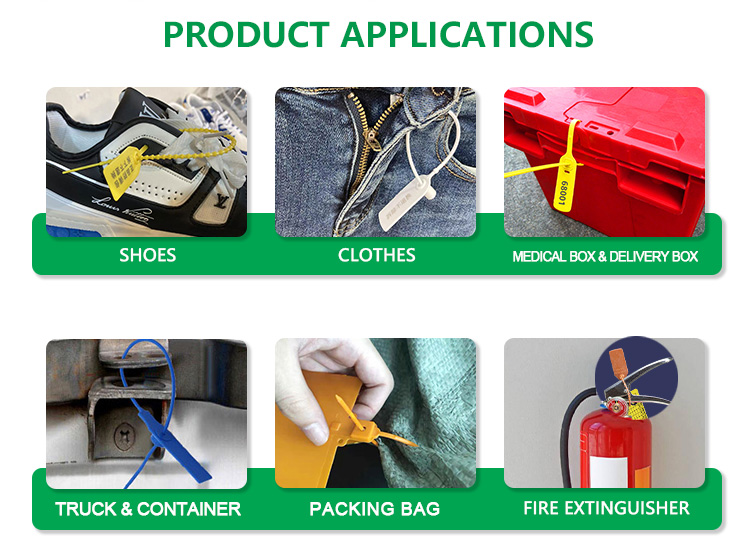
Length directly determines a seal's "sealing range"—the circumference it can encircle around a locked object and still insert properly into the locking mechanism. Industry insiders emphasize that seals should not be longer than necessary; excessive length may cause operational inconvenience and material waste, while insufficient length fails to achieve a secure closure. A well-designed length ensures that, when tightened, the seal strip sits flush against the lock, effectively preventing unauthorized opening or tampering.
The table below provides a clear overview of typical application scenarios for different seal length specifications:
| Seal Length Range | Typical Length Example | Primary Application Scenarios | Scenario Characteristics & Requirements |
|---|---|---|---|
| Compact (145mm – 280mm) | 203mm (approx. 8 inches) | Bank money bags, airline meal carts, small courier parcels, document pouches | Designed for small packages or boxes; lightweight operation suitable for fine-grain management scenarios. |
| Standard (280mm – 330mm) | 280mm, 330mm | General logistics transit boxes, courier totes, medium-sized carton goods | The most common all-purpose size, balancing ease of use with secure sealing for most standard-sized containers. |
| Extended (330mm – 400mm) | 365mm, 400mm | Large cartons, palletized goods, combination packaging, internal container dividers | Requires longer reach to encircle larger cargo or boxes; sufficient length to pass around thick latch bars or handles. |
| Extra-Long (400mm – 700mm) | 433mm, 500mm and above | Container doors, truck trailer doors, tanker valve or hatch covers, large warehouse gate locks | Maximum sealing range; must encircle bulky door bolts or valve handles; demands the highest tensile strength and tamper-evident performance. |
Overall Performance Matters – Customization Gains Traction
Beyond length, a seal's material composition, tensile strength, and tamper-resistant design are equally critical. Most security plastic seals on the market are manufactured from polypropylene (PP) or high-density polyethylene (HDPE), offering wear resistance, aging resistance, and protection against acids and alkalis. Tensile strength varies significantly across product grades, ranging from standard 150N to heavy-duty 500N and above. Users should select based on cargo value and security risk levels.
Notably, as corporate security management becomes increasingly sophisticated, customized seals are emerging as a growing trend. Many manufacturers now offer not only customizable lengths but also tailored colors and printed content, including company logos, serial numbers, and barcodes. This service model meets both the physical dimension requirements of different industries and addresses brand visibility and anti-counterfeit traceability needs.
Selection Recommendations: Match the Scenario, Balance the Factors
In summary, selecting the right security plastic seal length is an exercise in balance. When making purchasing decisions, users should consider their actual box or door dimensions, required security level, and operational convenience—while evaluating total length, effective length, and tensile strength as core metrics.
The fundamental rule: the seal's total length must exceed the circumference of the object being secured (such as a latch or handle) to ensure the strip can smoothly pass through the lock head and be properly tightened. Only by getting this "length" dimension right can these small seals deliver their full potential in safeguarding supply chain security.