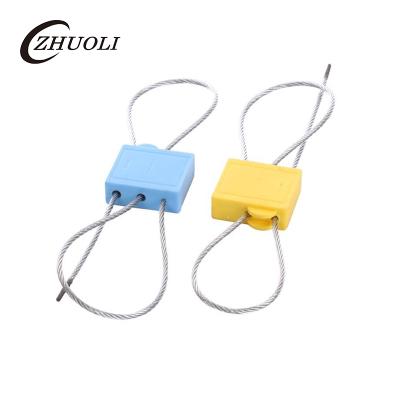
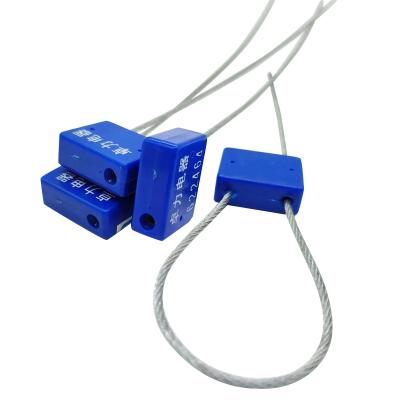
RFID Wire Cable Seals: 5 Core Advantages Driving Global Shipping's 2026 Shift to Smart Security
As the global shipping industry accelerates its digital transformation, RFID wire cable seals are rapidly evolving from an "optional innovation" into a "mandatory standard." Compared with conventional wire seals and traditional electronic seals, RFID wire cable seals deliver significant competitive advantages across four critical dimensions: security, efficiency, traceability, and total cost of ownership. Below is a comprehensive breakdown.
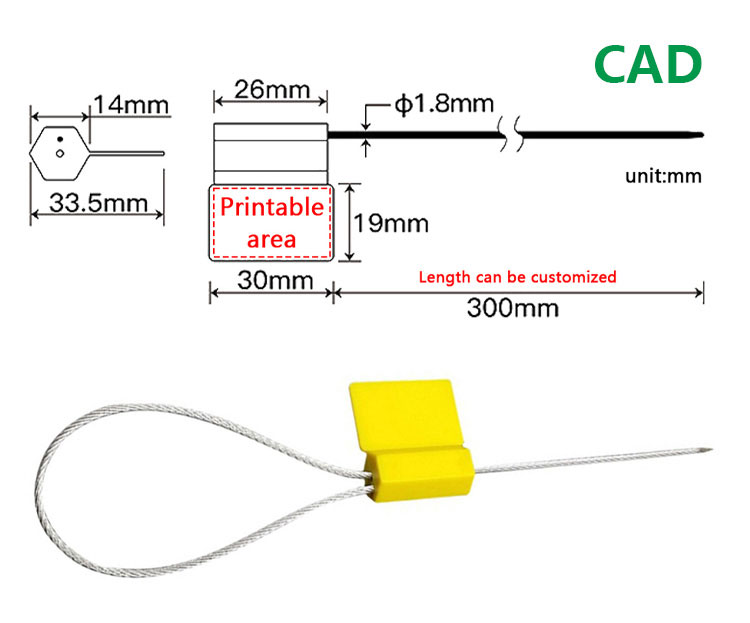
1. Security Advantage: Dual-Layer Tamper Protection – Physical + Digital
1.1 Irreversible Tamper Alert Upon Physical Severing
The RFID chip antenna is integrated directly into the steel cable's core. If the seal is cut or forcibly broken, the antenna circuit is immediately interrupted, and the chip's internal status flag is permanently logged as "open" – with no method of resetting it. This completely eliminates the common physical fraud method of "cutting and reconnecting" the seal.
1.2 Unique ID Encryption Prevents Cloning
Each seal is factory-programmed with a globally unique 128-bit encrypted serial number that cannot be altered. This serial number is cryptographically linked to the shipping manifest and customs declaration data on the system side. Even if someone physically replicates the seal's appearance, they cannot replicate its digital identity. The anti-counterfeiting level meets military-grade standards.
1.3 Timestamp Locks Every Operation
The chip automatically records the exact time (down to the second) of every locking and opening event, along with the associated operator ID. This means any "unscheduled opening" event during transit is permanently recorded, providing irrefutable digital evidence for cargo insurance claims and liability determination.
2. Efficiency Advantage: From Minutes to Milliseconds
2.1 Automated Gate Scanning – No Manual Intervention
Traditional seals require security personnel to step out of vehicles, visually verify numbers, and manually enter data into systems. RFID seals, by contrast, can be batch-scanned in 0.1 seconds as containers pass through gates – without requiring trucks to slow down or stop. According to the Singapore Port Authority's 2026 pilot data, RFID seals increased gate throughput efficiency by over 30%.
2.2 Batch Read Capability for Whole-Vessel Operations
RFID readers can simultaneously identify tens or even hundreds of seal tags without the need for individual scanning. This is critical for rapid inbound/outbound processing and transshipment operations for entire container vessels, significantly reducing port turnaround times.
2.3 Remote Inventory Checks – No Container Opening Required
Port yards and warehouses can use handheld or fixed readers to scan RFID seal status from outside container stacks, enabling inventory checks without opening containers. This is particularly advantageous for bulk cargo, hazardous materials, and cold-chain logistics.
3. Traceability Advantage: End-to-End Full-Chain Visibility
3.1 Record Keeping at Every Checkpoint
RFID seals cover every node from factory loading, overland transport, port yard storage, ocean shipping, to final destination unpacking. Every time the container passes a reader-equipped checkpoint, the system automatically records the time, location, and status, forming an immutable, complete logistics trail.
3.2 Deep Integration with Cargo Information
The RFID tag can store not only the seal ID but also cargo batch numbers, container numbers, bill of lading numbers, and other core data. When a seal is opened, the system instantly retrieves the complete cargo profile for that container, facilitating customs spot checks and owner tracking.
3.3 Natural Fit for Blockchain Storage
Leading supply chain platforms now integrate RFID seal data with blockchain technology. Every seal status change is real-time anchored on the blockchain, ensuring all stakeholders (shipper, carrier, customs, consignee) share a consistent and tamper-proof data view.
4. Cost Advantage: Lower Total Cost of Ownership
4.1 Reduced Manual Inspection Costs
Traditional seals require extensive manual number verification, data entry, and photo archiving. With automated RFID reading, labor costs are reduced by over 50%, especially in high-frequency, high-volume port operations.
4.2 Lower Cargo Insurance Premiums
Because RFID seals offer high-grade tamper protection and full traceability, insurers now offer 10% to 20% premium reductions for cargo using RFID seals. In 2026, several major insurance companies have already adopted this as a preferential policy.
4.3 Reduced Penalties for Abnormal Delays
If a seal is unauthorizedly opened in transit, the RFID system triggers an immediate alert, allowing carriers to address the issue before cargo arrival, thereby avoiding high demurrage charges, fines, and customer compensation. Comprehensive cost modeling shows that early adopters recover the additional RFID seal purchase cost within an average of six months.