How to Choose the Right Container Bolt Seal for Your Shipments
Selecting the appropriate container bolt seal is a critical procurement decision that directly impacts cargo security, insurance compliance, and supply chain integrity. For logistics managers, shipping professionals, and B2B buyers, the choice extends beyond simply picking a metal lock. It involves a strategic assessment of risk, route, regulation, and total cost of ownership. An incorrect choice can lead to increased vulnerability, costly delays, or rejected insurance claims. This comprehensive guide will walk you through the essential factors to consider, ensuring you specify the right high security bolt seal for every shipment.
Understanding the Core Function: More Than Just a Lock
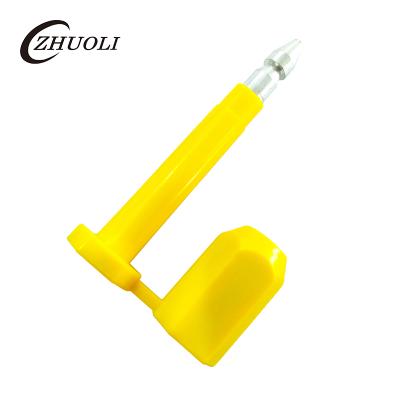
A container bolt seal is a single-use, tamper-evident device designed to secure the doors of intermodal freight containers. Its primary purpose is not to prevent entry indefinitely, but to provide clear, irreversible evidence of any unauthorized access attempt during transit. When chosen correctly, it acts as a forensic checkpoint, answering the vital question: "Was this container opened between point A and point B?" This function is foundational for liability determination, cargo security, and maintaining a verifiable chain of custody.
Key Factors in Selecting Your Container Bolt Seal
The selection process should be methodical, based on the following critical criteria:
1. Security Level and Compliance Standards
This is the foremost consideration. Not all bolt seals offer the same level of protection.
ISO 17712 Certification - The Global Benchmark: This international standard classifies seals into three categories: 'I' (Indicative), 'S' (Security), and 'H' (High Security). For international shipping, ISO 17712 certified bolt seals rated 'H' are the industry expectation.
What 'H' Grade Means: It certifies that the seal has been independently tested and meets minimum thresholds for tensile strength (resistance to pulling apart), shear strength (resistance to cutting), and impact resistance.
Why It's Non-Negotiable: Most shipping lines, ports, and cargo insurers explicitly require or strongly recommend high security seals that are ISO 17712 'H' certified. Using uncertified seals can invalidate insurance policies and raise red flags during customs inspections.
2. Material and Construction Quality
The durability and tamper-resistance of a container door seal are dictated by its materials.
Bolt (Pin) Material: The bolt should be made of case-hardened or alloy steel. Hardening prevents it from being easily cut with bolt cutters. The diameter is also crucial—thicker bolts generally offer higher shear strength.
Body (Collar) Material: The locking body is typically made from hardened steel, robust zinc alloy, or high-strength composite polymers. Metal bodies offer greater physical security against crushing or drilling attacks.
Anti-Tamper Features: Look for designs that include a free-spinning barrel. This feature prevents attackers from gripping the body and the bolt simultaneously to twist and break it. A smooth, hardened bolt surface also resists gripping tools.
3. Unique Identification and Traceability
Every seal must be uniquely identifiable to serve as a reliable part of your documentation trail.
Sequential Numbering: A laser-etched or embossed unique serial number is essential. This number must be recorded on the Bill of Lading, packing list, and your internal system.
Barcoding and RFID: For advanced container security and efficient logistics, consider seals with integrated barcodes or RFID tags. These enable automated scanning at port gates and yard checks, reducing human error and integrating with cargo tracking systems.
4. Specific Application and Environmental Factors
A "one-size-fits-all" approach is risky. Consider the specific context of your shipment.
Cargo Value and Risk Profile: High-value electronics, pharmaceuticals, or sensitive goods demand the highest grade of tamper proof bolt seal. Lower-value, bulk commodities might allow for a standard security option, though compliance often dictates the minimum.
Shipping Route and Climate: Corrosion is a major enemy. For sea freight or routes through humid climates, specify seals with anti-corrosion coatings such as galvanization (zinc plating) or choose stainless steel components. This ensures the numbering remains legible and the mechanism doesn't seize.
Compatibility with Container Type: While standard dry containers use a common hasp design, ensure the seal's bolt length is sufficient to pass cleanly through both door locking rods and engage securely.
The Step-by-Step Procurement Decision Framework
To synthesize the factors above, follow this practical decision framework:
Step 1: Mandate Compliance. Check the requirements of your shipping line and insurance provider. If they mandate ISO 17712 certified seals, this immediately narrows your options to certified 'H' grade suppliers.
Step 2: Assess Cargo Risk. Classify your shipments into risk tiers (e.g., high, medium, low) based on value, sensitivity, and theft desirability. Allocate higher-specification seals to higher-risk tiers.
Step 3: Evaluate Technical Specifications. For your chosen risk tier, compare:
Bolt diameter and material hardness.
Body construction (metal vs. composite).
Presence of anti-tamper features (free-spin barrel).
Corrosion resistance rating.
Step 4: Plan for Operational Efficiency. Decide if manual number recording is sufficient or if the volume and speed of your operations justify investment in barcode/RFID bolt seals for automated data capture.
Step 5: Source from a Reputable Supplier. Partner with a manufacturer or distributor who provides:
Valid ISO 17712 test certificates.
Detailed material specifications.
Consistent quality and reliable supply.
Technical support for application questions.
Common Pitfalls to Avoid
Choosing Based on Price Alone: The cheapest seal is often the weakest link, potentially costing far more in lost cargo or insurance disputes.
Ignoring Environmental Factors: A seal that rusts shut or has its number fade becomes useless for verification.
Poor Record-Keeping: The most secure seal is worthless if its unique number is not accurately recorded and shared with all authorized parties in the supply chain.
Using a Reusable or Re-lockable Device: True container bolt seals are single-use. Reusable devices do not provide reliable tamper evidence.
Conclusion and Professional Action Plan
Choosing the right container bolt seal is a direct investment in your supply chain's resilience. It is a low-cost component that carries the high responsibility of proving your cargo's integrity across thousands of miles and multiple handoffs.
The optimal choice balances certified security, durable construction, and operational practicality. By following the framework of Compliance, Risk, Specification, and Operation, you can make an informed, defensible procurement decision.