Does Temperature Affect Plastic Security Seals?
A Focused Guide on Thermal Performance
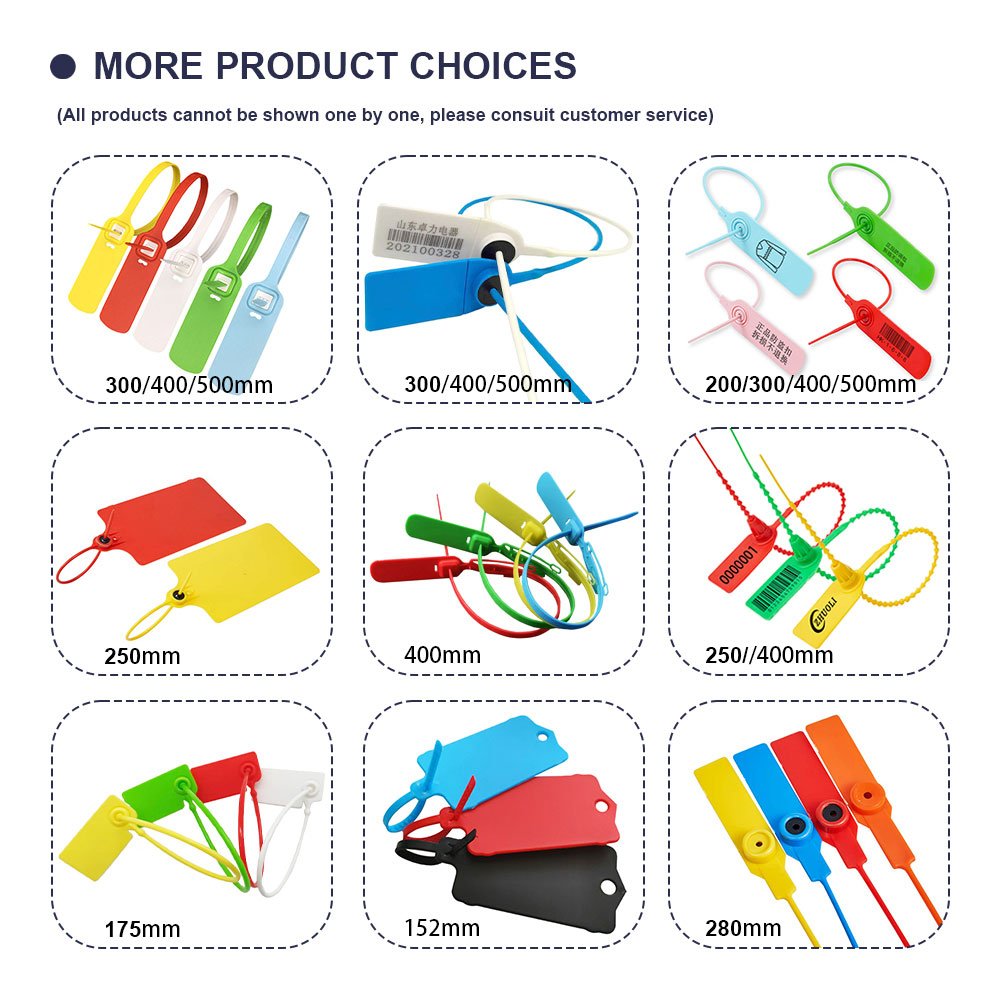
Plastic security seals (also known as self‑locking plastic seals or nylon cable ties) are widely used in logistics, manufacturing, and outdoor asset protection. They are lightweight, economical, and easy to apply. However, a common question among users is:
Does temperature affect plastic security seals?
Yes, it does. Temperature is one of the most critical factors influencing the mechanical properties, reliability, and service life of plastic seals. Understanding these thermal effects is essential for proper selection and safe operation.
This article focuses specifically on how temperature impacts plastic security seals.
1. General Operating Temperature Range
Most standard plastic security seals are manufactured from nylon (polyamide) . They are designed to perform reliably across a wide temperature range:
| Parameter | Value |
|---|---|
| Standard operating range | ‑40°C to 120°C |
| Electrical insulation rating | ≤ 105°C (no performance loss) |
Within this range, plastic seals maintain good tensile strength, rigidity, and resistance to heat aging.
2. Low‑Temperature Effects (Below ‑40°C)
When plastic seals are exposed to extremely low temperatures, their material behavior changes significantly:
Key Changes:
Toughness decreases – the seal becomes more brittle.
Impact resistance drops – sudden force or bending may cause cracking.
Flexibility is reduced – the seal is harder to install or tighten.
Practical Recommendations:
Avoid excessive bending or impact in cold environments.
Do not exceed the seal's tensile strength when tightening.
If possible, allow seals to acclimate to room temperature before installation.
⚠️ Note: Below ‑40°C, many standard plastic seals may become too brittle for reliable use. For extreme cold conditions, request low‑temperature‑rated seals from your supplier.
3. High‑Temperature Effects (Above 120°C)
High temperatures accelerate material aging and can permanently degrade plastic seals.
Key Changes:
Accelerated thermal aging – the seal may yellow, harden, or become brittle over time.
Tensile strength decreases – the seal is more likely to break under load.
Softening or deformation – near or above 120°C, the seal may lose its shape and locking ability.
Practical Recommendations:
Keep plastic seals away from direct contact with hot surfaces (e.g., engine exhaust pipes, steam lines, hot machinery).
Do not use standard plastic seals in continuous high‑temperature environments above 120°C.
For high‑temperature applications, request heat‑stabilized or high‑temperature nylon seals.
⚠️ Note: Electrical properties remain stable up to 105°C, but mechanical strength may begin to decline before that point in prolonged exposure.
4. Thermal Cycling (Repeated Heating and Cooling)
In real‑world conditions, plastic seals often experience thermal cycling – repeated temperature changes between hot and cold.
Potential Issues:
Expansion and contraction can cause micro‑cracks over time.
Locking mechanism may loosen if the seal material loses elasticity.
Accelerated fatigue reduces overall service life.
Recommendation:
For applications with frequent temperature swings (e.g., refrigerated trucks moving to hot outdoor environments), inspect seals regularly and replace them proactively.
5. Summary of Temperature Effects
| Temperature Condition | Material Behavior | Risk |
|---|---|---|
| ‑40°C to 120°C | Normal operation | Low (within spec) |
| Below ‑40°C | Brittle, reduced flexibility | Cracking under impact |
| Above 120°C | Softening, aging, strength loss | Deformation or breakage |
| Thermal cycling | Fatigue, micro‑cracks | Reduced service life |
6. Best Practices for Temperature‑Sensitive Applications
To ensure plastic security seals perform reliably in environments with temperature extremes:
| Scenario | Recommended Action |
|---|---|
| Cold storage / Arctic conditions | Use low‑temperature‑rated nylon seals |
| High‑heat industrial settings | Use heat‑stabilized or high‑temperature nylon seals |
| Outdoor direct sunlight (UV + heat) | Use UV‑stabilized and weather‑resistant plastic seals |
| Refrigerated transport with outdoor exposure | Inspect regularly; replace at first sign of brittleness |
| Electrical / electronic equipment | Ensure operating temperature ≤ 105°C for insulation safety |
Conclusion
Yes, temperature does affect plastic security seals. While most standard plastic seals operate reliably from ‑40°C to 120°C, extreme cold reduces toughness, and extreme heat accelerates aging and strength loss.
By understanding these thermal effects and following the recommendations above, users can select the right plastic seal for their specific temperature environment and avoid premature failure.
For applications outside the standard temperature range, always consult your supplier for low‑temperature, high‑temperature, or heat‑stabilized plastic seal options.
Need a Temperature‑Specific Plastic Seal Solution?
If your application involves extreme cold, continuous heat, or frequent thermal cycling, contact our technical team. We can recommend or custom‑engineer plastic security seals that meet your exact temperature requirements.
📞 Contact us today for a consultation or sample testing.